Augmented Reality Glasses: Enhancing Creativity and Collaboration
26 February 2026
Technology never ceases to amaze us, right? One minute, we’re glued to our screens, and the next, we’re stepping into a world where digital elements blend seamlessly with reality. Augmented Reality (AR) glasses are quickly becoming a game-changer, pushing the boundaries of creativity and collaboration like never before.
Whether you're an artist sketching in mid-air, a designer visualizing a 3D model in real time, or part of a remote team brainstorming on a shared virtual canvas, AR glasses are shaking up the way we work, create, and communicate.
In this article, we'll dive into how AR glasses are revolutionizing creativity and teamwork, their real-world applications, and what the future holds for this mind-blowing technology. 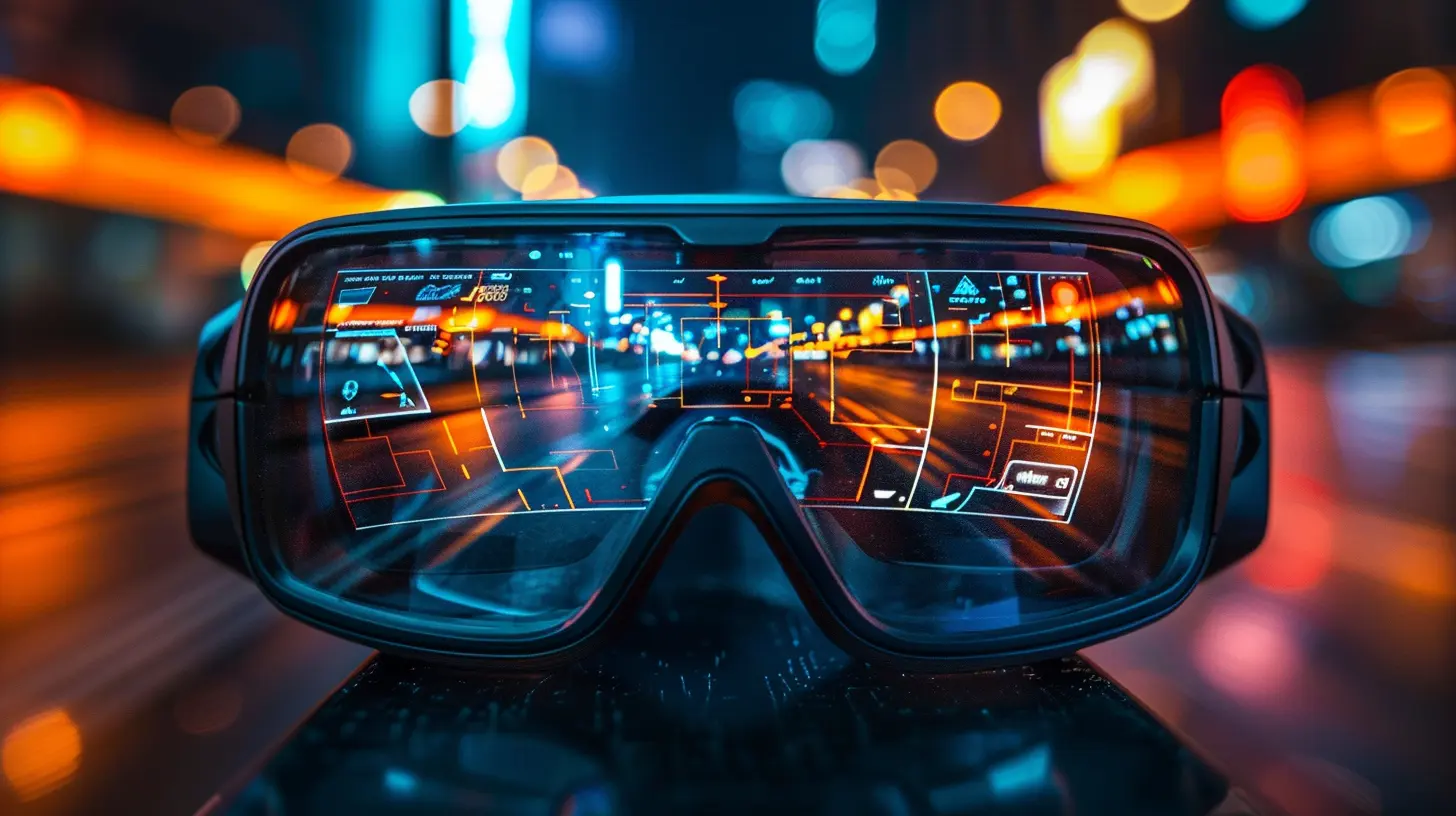
What Are Augmented Reality Glasses?
Before we get ahead of ourselves, let’s get one thing straight—what exactly are AR glasses?Unlike Virtual Reality (VR) headsets that transport you to a completely digital world, AR glasses overlay digital information onto the real world. Think of them as a futuristic upgrade to your regular eyewear, allowing you to see virtual objects, holograms, and data seamlessly integrated into your surroundings.
These glasses use cameras, sensors, and advanced display technology to create an immersive but non-intrusive experience. Whether it's Google’s Magic Leap, Microsoft’s HoloLens, or Snap’s Spectacles, AR wearables are opening new doors in various industries. 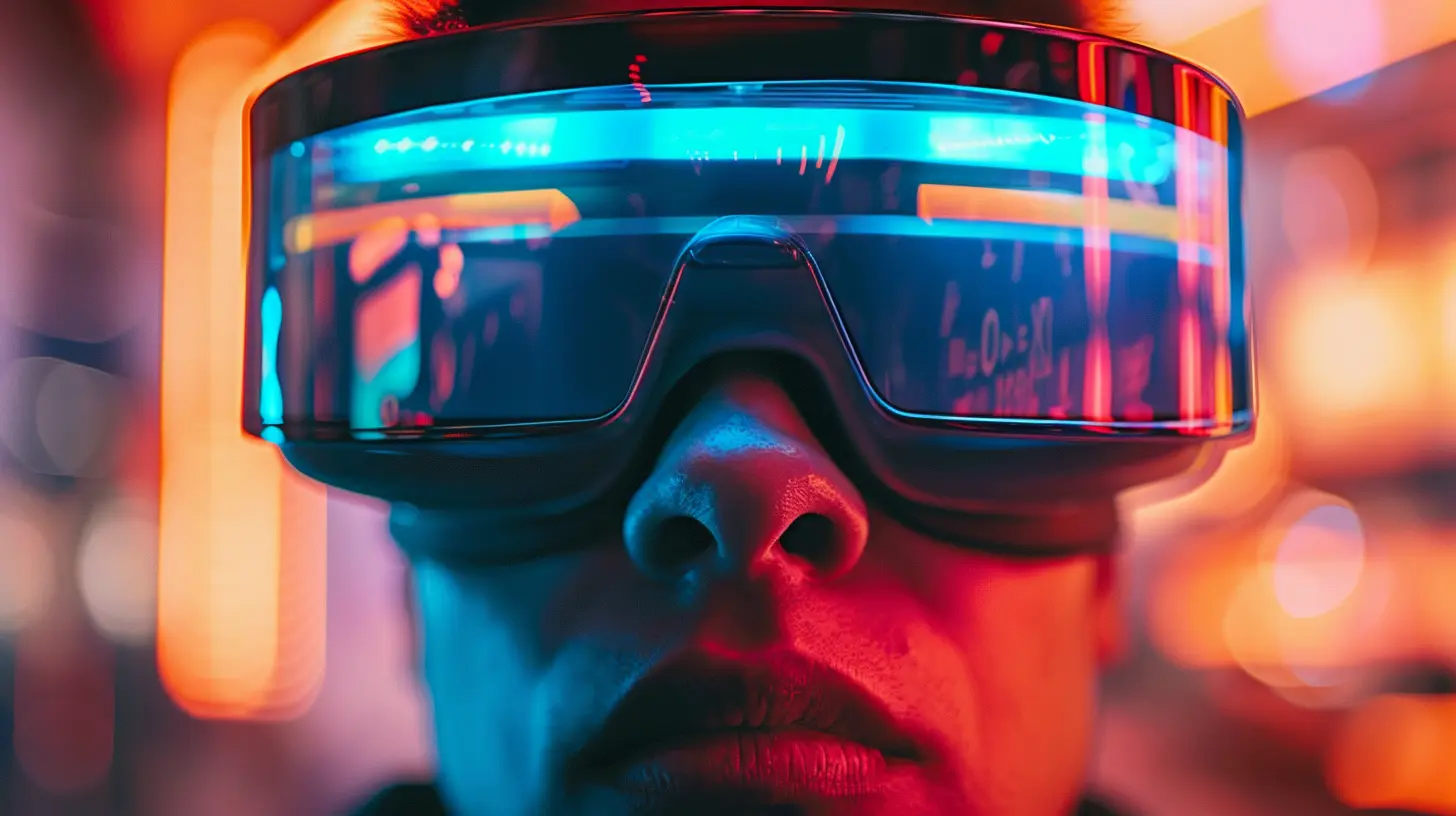
How AR Glasses Boost Creativity
Creativity isn't just about thinking outside the box—sometimes, it's about removing the box entirely. AR glasses are doing just that by offering new ways to express ideas, visualize concepts, and interact with digital elements.1. Creating in 3D Space
Imagine sketching an idea in thin air and watching it take shape as a 3D model right before your eyes. That’s exactly what AR glasses enable.Artists, architects, and designers can create, modify, and refine 3D designs in real-time. Apps like Gravity Sketch and Microsoft’s Mixed Reality tools allow professionals to bring their visions to life in a more intuitive way than ever before.
No more second-guessing or relying solely on 2D sketches—AR lets creatives refine ideas instantly and interact with their designs from every angle.
2. Interactive Storytelling & Media
Filmmakers, writers, and content creators are finding groundbreaking ways to tell immersive stories using AR. Imagine watching a movie where characters step out of the screen and interact with your surroundings, or reading a book where illustrations come to life right before your eyes.This next-level storytelling not only enhances the audience's experience but also allows creators to experiment with dynamic, interactive narratives that were impossible before.
3. Enhancing Music & Performance Art
Musicians and performers are already experimenting with AR glasses to create immersive shows. Picture a concert where holographic visuals sync with live performances or DJs manipulating digital soundscapes floating in the air.AR technology is breaking the barriers between the digital and physical worlds, enabling artists to innovate in ways that once seemed like pure science fiction. 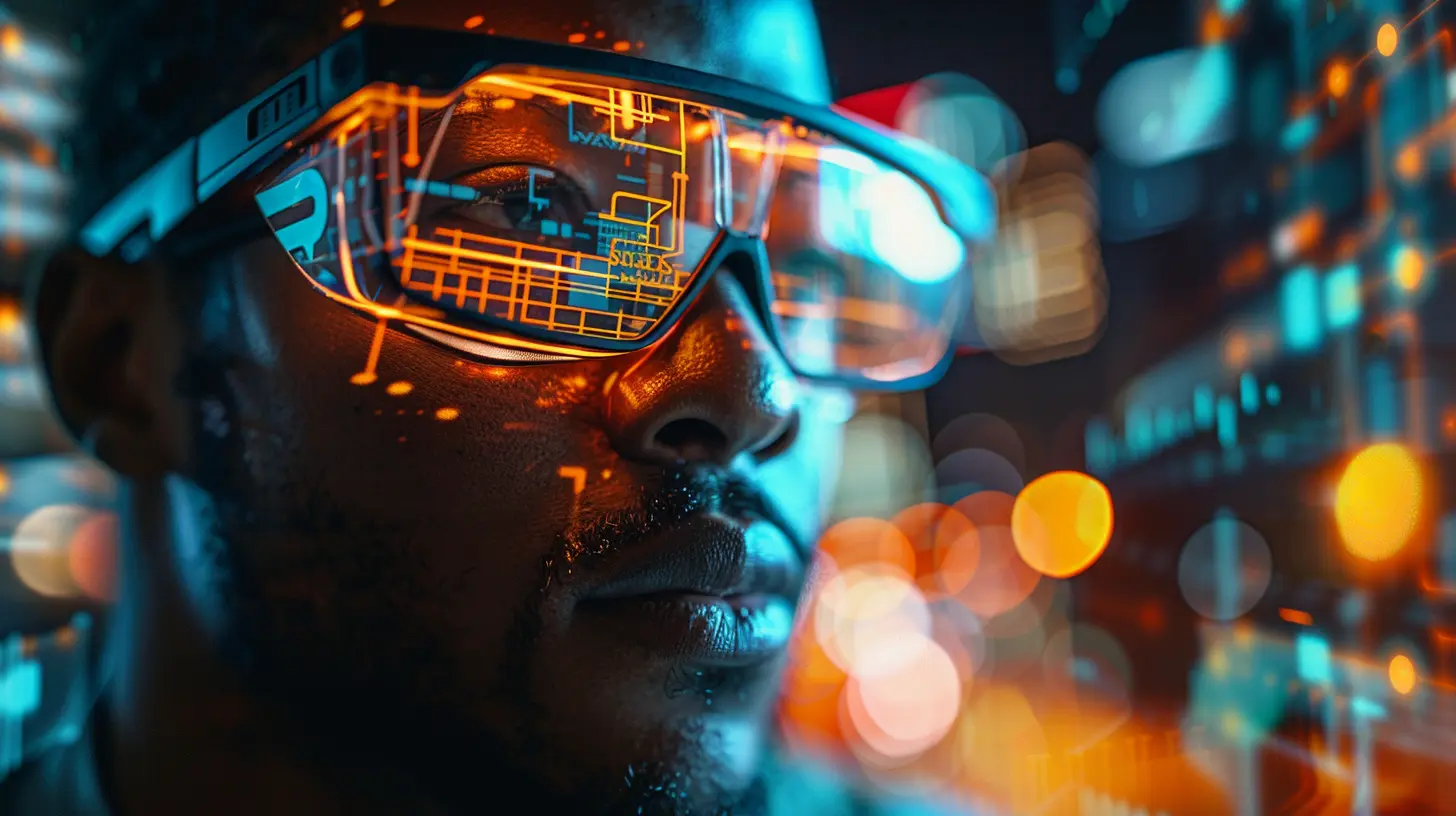
How AR Glasses Improve Collaboration
Collaboration has evolved beyond physical meetings, emails, and video calls. With AR glasses, teamwork becomes more interactive and efficient, no matter where you are in the world.1. Remote Teamwork & Virtual Meetings
Let’s face it—Zoom calls have their limitations. Ever struggled with miscommunication over video meetings? AR glasses solve this by bringing remote teams into the same virtual workspace.Instead of staring at a screen, you can “stand” next to your colleagues in a shared AR environment, interact with 3D models, brainstorm on a digital whiteboard, and engage with holographic presentations as if you were in the same room.
Companies like Spatial and Microsoft Mesh have already launched platforms that allow remote teams to collaborate in AR, making traditional meetings feel outdated.
2. Real-Time Problem Solving
Need expert guidance but the specialist is miles away? No problem. AR glasses allow professionals to share their viewpoint with experts remotely, enabling real-time troubleshooting.For example, an engineer repairing a complex machine can wear AR glasses and receive step-by-step guidance from a specialist who sees exactly what they see. This application is already making waves in fields like aviation, healthcare, and industrial maintenance.
3. Better Training & Education
Training employees or students using manuals and PowerPoint slides feels painfully outdated. With AR glasses, learning is interactive, engaging, and hands-on.Medical students can practice virtual surgeries in a real-world setting, mechanics can learn how to assemble parts by interacting with AR instructions, and employees can receive on-the-job training with real-time AR assistance.
Companies like Boeing and Walmart are already using AR-based training programs to enhance their workforce’s learning experience. 
Industries Benefiting from AR Collaboration
The applications of AR glasses extend far beyond just work meetings and creative endeavors. Many industries are already jumping on the AR train, using it to improve efficiency and productivity.1. Healthcare
- Surgeons use AR glasses for precision-guided procedures.- Medical professionals can receive real-time assistance during emergencies.
- Patients can better understand their conditions with 3D visualizations.
2. Architecture & Engineering
- Architects can visualize blueprints in a real-world setting.- Engineers can perform virtual walkthroughs of designs before building.
- Construction teams can improve efficiency with AR-based planning.
3. Retail & Marketing
- Customers can try on clothes, glasses, or makeup virtually.- AR-powered ads create an interactive shopping experience.
- Businesses can use AR filters to engage customers on social media.
4. Manufacturing & Logistics
- Workers can receive step-by-step assembly instructions.- AR improves warehouse management with real-time inventory tracking.
- Technicians can diagnose machinery issues faster with AR overlays.
The Future of AR Glasses
While AR glasses are already making waves, we’re just scratching the surface of their potential. As technology advances, we can expect AR wearables to become lighter, more affordable, and even more powerful.1. Affordability & Accessibility
Right now, high-end AR glasses like Microsoft HoloLens are still pricey. But just like smartphones evolved from luxury gadgets to everyday essentials, AR glasses will follow the same path. Cheaper, mass-market versions will soon make them accessible to the average consumer.2. Integration with AI
AI-powered AR glasses will take automation and assistance to new levels—imagine smart glasses that instantly translate foreign languages, identify objects, or provide real-time contextual information just by looking at them.3. Seamless Connectivity with Other Tech
As 5G connectivity expands, AR glasses will offer smoother, more immersive experiences. Combined with the rise of the metaverse, these wearables might replace smartphones for many of our daily digital interactions.4. More Natural & Lightweight Designs
Bulky AR headsets may soon become a thing of the past. Companies are working on sleeker, more natural-looking AR glasses that resemble traditional eyewear. Apple, Meta, and Google are already rumored to be developing such devices that will blend into everyday fashion.Final Thoughts
AR glasses aren’t just sci-fi gadgets anymore—they’re here, and they’re revolutionizing the way we create, collaborate, and interact with the world.From digital artists designing in mid-air to remote teams engaging in lifelike virtual meetings, the potential of AR wearables is limitless. While there are still challenges to overcome, one thing’s for sure: the future of augmented reality is incredibly exciting.
So, whether you’re an innovator, a creative, or just someone curious about the future of technology, keep an eye on AR glasses. They’re not just enhancing our reality—they’re redefining it.
all images in this post were generated using AI tools
Category:
Ar GlassesAuthor:

Gabriel Sullivan
Discussion
rate this article
2 comments
Troy Lawrence
This article beautifully highlights how augmented reality glasses can transform creative collaboration. Excited to see where this technology leads us!
March 28, 2026 at 1:26 PM
Gabriel Sullivan
Thank you! I'm glad you enjoyed it. Exciting times ahead for AR and collaboration!
Bellamy Abbott
This article highlights the potential of augmented reality glasses to transform creative processes and teamwork. While the technology is promising, challenges such as user adoption, privacy concerns, and cost must be addressed for widespread implementation. Exciting prospects lie ahead, but caution is needed.
February 26, 2026 at 5:16 AM
Gabriel Sullivan
Thank you for your thoughtful comment! I agree that while augmented reality glasses hold great promise for enhancing creativity and collaboration, addressing challenges like user adoption and privacy is crucial for their successful implementation.