How Education Will Be Transformed by Robotic Tutors
20 August 2026
Let's be honest: the phrase "robotic tutor" sounds like something from a 1980s sci-fi movie where a chrome-plated humanoid with a red LED eye scolds you for forgetting your multiplication tables. But the reality is far less dramatic and far more interesting. We are not talking about Terminator-style robots standing at a chalkboard. We are talking about physical machines, often small, mobile, and disarmingly cute, that can teach, quiz, and motivate students in ways a tablet simply cannot.
The transformation of education by robotic tutors will not be a single explosive event. It will be a slow, steady infiltration, starting with specific use cases and then spreading to the general classroom. To understand where this is going, you have to understand what robots do better than screens, what they do worse than humans, and where the real value lies. This is not about replacing teachers. It is about giving them a superpower.
The Difference Between a Screen and a Body
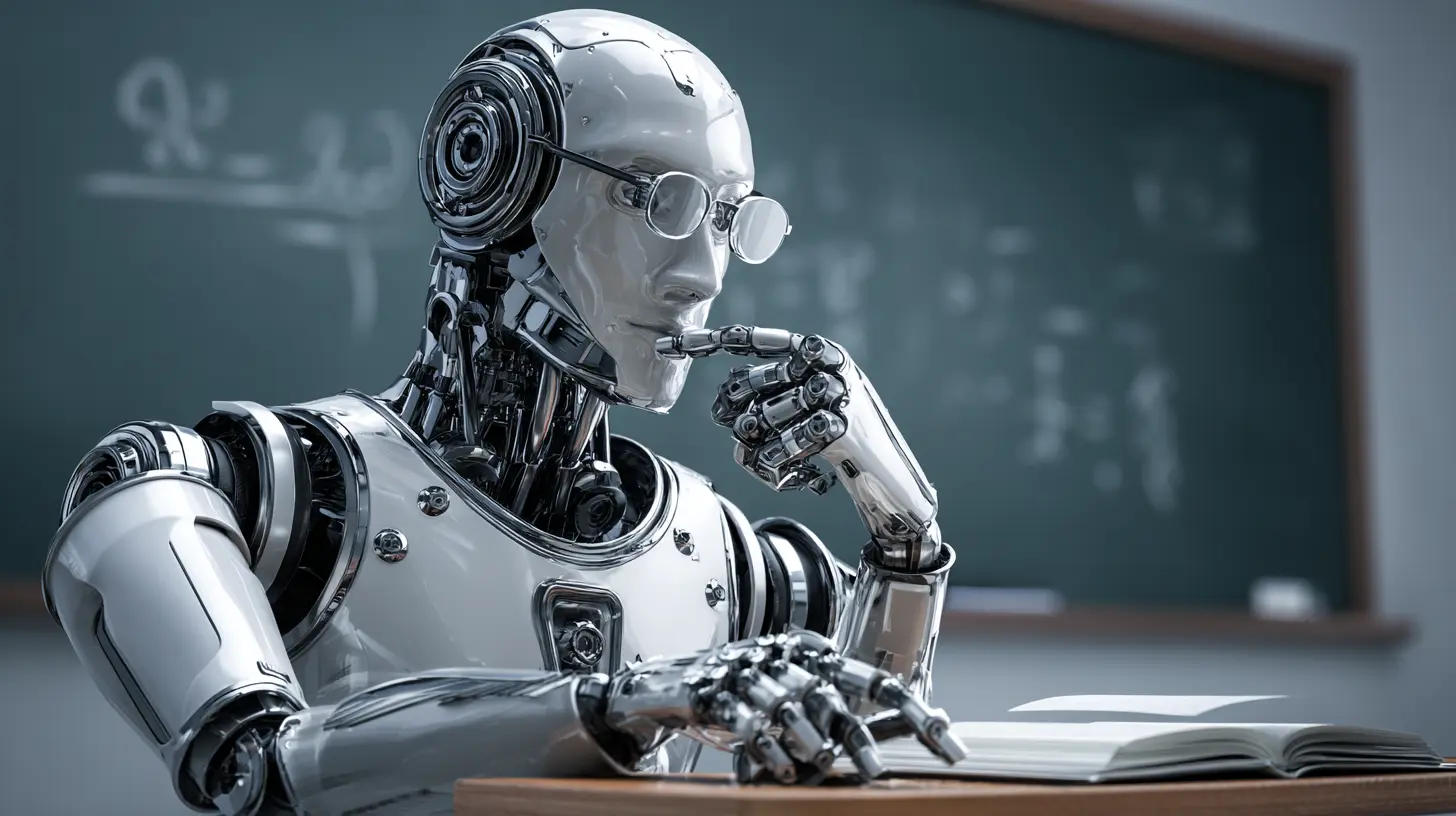
The biggest mistake people make is thinking a robotic tutor is just a tablet on wheels. That is wrong. A screen is a window. A robot is a presence. When a child interacts with a screen, they are interacting with content. When they interact with a robot, they are interacting with an entity. This distinction matters more than you might think.Physical Presence Changes Behavior
Studies in human-robot interaction have repeatedly shown that people, especially children, treat robots as social actors. They name them. They apologize to them. They get excited when the robot remembers their birthday. This social presence drives engagement in a way that a flashy app cannot match. A child who would happily ignore a math worksheet might beg to spend time with a robot that physically nods its head and gives a high-five after a correct answer.This is not a gimmick. It is a psychological lever. The physical body creates a sense of shared space. When a robot leans in to look at your work, you feel observed. That feeling of being watched, without the judgment of a human, creates a sweet spot for learning. It is enough pressure to keep you focused, but not enough to make you anxious. A screen does not have this effect. A screen is passive. You can ignore a screen. It is much harder to ignore a robot that is physically turning its head toward you and waiting for a response.
The Tactile Advantage
Another underrated factor is touch. Robotic tutors can hold objects, point at things, and demonstrate physical actions. For subjects like geometry, physics, or even art, this is huge. A robot can physically show you what a right angle is by rotating its arm. It can demonstrate the concept of balance by stacking blocks. It can guide your hand for handwriting practice. This is something a video lesson can never do.The tactile element also helps with attention. When a student is doing a hands-on activity with a robot, they are using more senses than just sight and hearing. That multisensory engagement leads to better retention. It is the same reason why science labs work better than science videos. The robot brings that lab experience to the student, even in a crowded classroom.
Where Robotic Tutors Shine (And Where They Do Not)
Not all subjects are created equal when it comes to robotic tutoring. Knowing the difference is key. If you try to force a robot to teach something it is bad at, you will end up with a very expensive paperweight.The Sweet Spot: Drilling, Practice, and Feedback
Robots are fantastic at repetitive tasks. They never get bored. They never get tired. They can run the same multiplication drill a hundred times without sighing or rolling their eyes. This is the perfect niche for them. Math facts, vocabulary flashcards, spelling tests, and grammar exercises are all ideal candidates.The reason is simple: these tasks require consistent, immediate feedback. A robot can tell you instantly if you are right or wrong, and it can adjust the difficulty level based on your performance without any visible frustration. This is something a human tutor struggles with after the fiftieth repetition. The robot does not have that problem. It is patient by design.
robots can track micro-progress. They can notice that you consistently mess up the 7s in your times tables and then spend extra time on that specific area. This kind of granular data is hard for a human to collect manually, but it is second nature for a robot.
The Weak Spot: Open-Ended Discussion and Critical Thinking
Now for the bad news. Robots are terrible at open-ended discussion. If you ask a robot to debate the ethics of artificial intelligence or to help you brainstorm a creative writing piece, you will get a canned response. It might sound smart, but it lacks the depth of a human conversation. A human teacher can pick up on a student's confusion, ask a probing question, and guide the discussion down an unexpected path. A robot cannot do this yet. It follows a script.This is not a failure of the robot. It is a limitation of current technology. Natural language processing is good, but it is not human-level. So, robotic tutors should not be used for subjects that rely heavily on nuance, interpretation, and emotional intelligence. Literature analysis, history debates, and complex essay writing should remain human-led for the foreseeable future.
The Middle Ground: STEM and Procedural Learning
The middle ground is where robots really earn their keep. Subjects like coding, basic engineering, and even lab safety procedures benefit from a physical presence. A robot can show you how to connect a circuit, then watch you do it, and correct your mistakes in real time. It can demonstrate the proper way to hold a pipette or the correct sequence for a chemical reaction. This is procedural learning, and it is perfect for a robot.The robot acts as a patient lab assistant. It does not get nervous when you almost drop a beaker. It does not get annoyed when you ask the same question twice. It just waits, observes, and corrects. This allows the human teacher to focus on the bigger picture, like explaining the theory behind the procedure, while the robot handles the repetitive skill-building.
The Real-World Impact on the Classroom
Let us move from theory to practice. Imagine a typical third-grade classroom in 2030. There is a human teacher, Mrs. Alvarez, and there are two small robots in the corner. The robots are not there to replace Mrs. Alvarez. They are there to extend her reach.The Flipped Classroom, Robot Edition
Mrs. Alvarez starts the day with a math lesson. She teaches the concept of fractions to the whole class. Then, she splits the students into three groups. Group one works with her on advanced problems. Group two works independently on worksheets. Group three works with the robots.The robots are programmed to run a series of fraction games. They show the students physical fraction blocks. They ask questions. They correct mistakes. They celebrate wins. While this is happening, Mrs. Alvarez is free to give intensive attention to the students who need it most. She is not being pulled in five directions. The robots are handling the practice phase, and she is handling the mastery phase.
This is the flipped classroom model on steroids. You are not just flipping the content delivery; you are flipping the practice. The robot handles the rote repetition, and the human handles the complex cognitive work. This is a massive win for efficiency.
Special Education and Personalized Pacing
Robotic tutors have enormous potential in special education. For children with autism, the predictability of a robot can be very comforting. A robot does not have unpredictable facial expressions or tone shifts. It is consistent. It does not get frustrated if the child needs extra time to process a question. This reduces anxiety and can lead to better learning outcomes.For students with ADHD, the robot can provide structured, short bursts of activity with frequent rewards. It can break a task into tiny pieces and offer a physical token or a high-five after each step. This kind of immediate reinforcement is very effective for maintaining focus.
The key here is personalization. A robot can be programmed to adjust its pacing for each student. It can give a student with dyslexia extra time to read a question without showing any signs of impatience. It can repeat instructions in a different way for a student who is a visual learner. This level of individualization is hard for a human teacher who has thirty students to manage.
The Homework Helper
One of the most practical uses of a robotic tutor is at home. Many parents struggle to help their kids with homework, especially in subjects they do not understand themselves. A robot can fill this gap. It can sit with the child, guide them through their assignments, and explain concepts in a way that matches the school's curriculum.This is not just about convenience. It is about equity. In a household where both parents work late or where the parents do not speak the language of instruction fluently, a robot can provide the academic support that would otherwise be missing. It is not a perfect replacement for parental involvement, but it is a massive improvement over no help at all.
The Hidden Costs and Trade-offs
It would be naive to think this transformation comes without drawbacks. There are significant costs, both financial and social, that need to be considered.The Financial Reality
Good robotic tutors are not cheap. A well-designed educational robot with reliable software and a durable body can cost anywhere from a few hundred to several thousand dollars. For a school district with a tight budget, buying one robot per classroom is a significant investment. And this is not a one-time cost. The software needs updating. The hardware needs maintenance. The batteries need replacing.This creates a potential equity gap. Wealthy school districts will adopt this technology quickly. Poor districts will lag behind. This is the same pattern we saw with computers and tablets, but robots are even more expensive. Unless there is government funding or a significant drop in price, robotic tutors might widen the achievement gap before they narrow it.
The Social Trade-off
There is also a social risk. If children spend too much time interacting with robots, they might develop a preference for machine interaction over human interaction. This is a concern for social development. A robot can teach you math, but it cannot teach you how to read a friend's mood or how to navigate a disagreement.The key is balance. Robotic tutors should be used as a supplement, not a replacement. The goal is to free up human teachers to do more human things, not to reduce human contact. If a school uses robots to replace recess monitors or to keep kids occupied while teachers do paperwork, that is a misuse of the technology.
The Over-Reliance Trap
Another common mistake is over-reliance. Teachers might start to assume the robot is handling the learning and stop checking in with students. This is dangerous. The robot is a tool, not a teacher. It cannot build a relationship with a student. It cannot notice that a student is feeling sad or anxious. It cannot inspire a student to pursue a passion.The human teacher must remain the central figure. The robot is an assistant, a drill sergeant, and a patient tutor all rolled into one, but it lacks the emotional intelligence to truly educate. The teacher must use the data the robot collects to inform their own instruction, not abdicate their responsibility.
The Future: What Comes Next
The technology is moving fast. In the next five to ten years, we will see robotic tutors that are more expressive, more adaptive, and more affordable. They will have better natural language processing, allowing them to handle more complex questions. They will have better sensors, allowing them to read a student's facial expressions and adjust their approach accordingly.From Reactive to Proactive
The next generation of robotic tutors will be proactive. Instead of waiting for a student to answer a question, they will monitor the student's gaze, posture, and heart rate to detect confusion or frustration before it becomes a problem. If a student is struggling, the robot will slow down and offer a different explanation. If a student is bored, the robot will speed up or introduce a new challenge. This is the ultimate form of personalized learning.The Integration with AI
These robots will be powered by sophisticated AI models that are trained on massive amounts of educational data. They will know dozens of ways to explain a concept. They will know the most common misconceptions and how to address them. They will be able to generate practice problems on the fly, tailored to the student's specific weaknesses.This is where the real transformation happens. It is not about the hardware. It is about the software that runs on it. The robot is just the delivery mechanism. The AI is the brain. And the AI is getting smarter every year.
The Role of the Teacher Evolves
As robotic tutors become more capable, the role of the human teacher will shift. Teachers will spend less time on rote instruction and more time on mentorship, project-based learning, and social-emotional development. They will become facilitators of learning rather than dispensers of information. This is a good thing. It moves the profession toward what it should be: a deeply human endeavor.The teacher will also become a manager of technology. They will need to know how to program the robots for their lessons, how to interpret the data the robots collect, and how to intervene when the robot is not working effectively. This requires new skills and new training. Teacher preparation programs will need to evolve to include human-robot interaction.
Common Misconceptions and Mistakes
Let us clear up a few things before you go out and buy a robot for your school.Misconception: Robots Will Replace Teachers
This is the biggest fear, and it is almost certainly wrong. Robots cannot build relationships. They cannot provide emotional support. They cannot inspire creativity or critical thinking in the way a human can. They are tools. A hammer does not replace a carpenter. A robot does not replace a teacher.Misconception: Robots Are Only for Kids
While the current market is focused on K-12, robotic tutors have applications in adult education, corporate training, and even university-level instruction. A robot can help a medical student practice a physical exam. It can help a language learner practice pronunciation. It can help a new employee learn the steps of a manufacturing process. The principles are the same: patience, repetition, and immediate feedback.Mistake: Buying the Cheapest Option
If you are thinking about adopting robotic tutors, do not buy cheap knock-offs. The software is more important than the hardware. A cheap robot with bad software will frustrate students and teachers alike. Look for a platform that is well-supported, regularly updated, and has a proven track record. It is better to have fewer, higher-quality robots than a classroom full of broken promises.Mistake: Expecting Immediate Results
Educational technology does not produce overnight miracles. It takes time for teachers to learn how to use the robots effectively. It takes time for students to get used to the new learning modality. Expect a transition period. The results will come, but they will be gradual. Do not abandon the project after a month because test scores did not jump. Give it a full semester, at least.Practical Advice for Getting Started
If you are a teacher or administrator considering robotic tutors, here is a practical roadmap.Start Small
Do not try to roll out robots across the entire school at once. Start with one classroom, one subject, and one specific use case. Math practice is a good starting point. See what works and what does not. Collect feedback from the teacher and the students. Iterate on the approach before expanding.Focus on Teacher Training
The robot is only as good as the teacher using it. Invest heavily in professional development. Teachers need to feel confident programming the robot, troubleshooting issues, and integrating it into their lesson plans. If the teacher is not comfortable, the robot will sit in the corner gathering dust.Define Success Metrics
Before you start, decide what success looks like. Is it improved test scores? Is it increased student engagement? Is it more efficient use of teacher time? Define your metrics and track them. This will help you justify the investment and make adjustments along the way.Involve Students in the Process
Students are often more adaptable than adults. They will take to the robots quickly. Let them help set up the robots. Let them suggest games or activities. When students feel ownership over the technology, they are more likely to engage with it.
The Bottom Line
Robotic tutors are not a silver bullet. They are not going to fix all the problems in education. But they are a powerful tool that, when used correctly, can make learning more engaging, more personalized, and more effective. They can take over the tedious parts of teaching, freeing up humans to do what they do best: connect, inspire, and guide.The transformation will not be overnight. It will be messy. There will be failures and frustrations. But the direction is clear. The future of education is not about replacing humans with machines. It is about using machines to make humans better. And that is a future worth working toward.
all images in this post were generated using AI tools
Category:
Robotics TechnologyAuthor:

Gabriel Sullivan