The Blend of Robotics and Virtual Reality
23 July 2026
The convergence of robotics and virtual reality is not a simple pairing of two technologies. It is a fundamental shift in how we interact with machines and how machines perceive us. For decades, robotics focused on autonomy and physical manipulation, while VR focused on immersion and simulated experience. Their intersection creates something neither can achieve alone: a bidirectional pipeline where human intent flows into a robot's actions and sensory feedback flows back to the human operator in a natural, intuitive way.
This article examines the practical realities of blending these fields. We will look at what works, what does not, and what decisions you need to make if you are building or investing in this space. I will avoid hype and focus on the engineering trade-offs, common pitfalls, and genuine breakthroughs that matter.
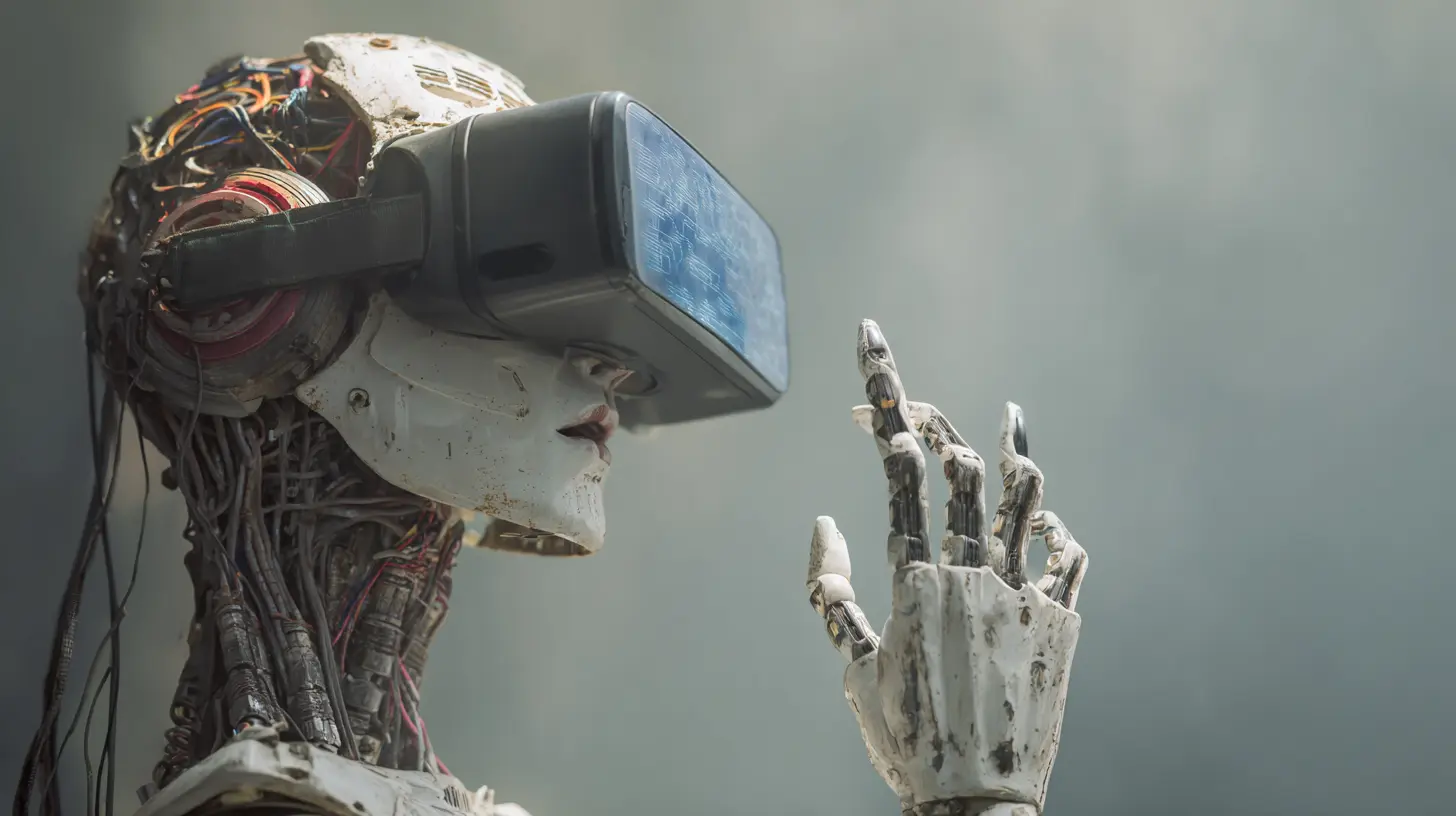
The Core Architecture: Why Latency Kills Immersion
Before discussing applications, you must understand the single most critical technical constraint in any robotic VR system: latency. In a pure VR game, a 20-millisecond delay between head movement and display update causes noticeable discomfort. In a robotic teleoperation system, that same delay introduces a 20-millisecond gap between your hand motion and the robot's response. The result is not just nausea; it is a loss of dexterity.The human sensorimotor system expects immediate correspondence between intention and action. When that correspondence breaks, operators compensate by moving more slowly and deliberately, which defeats the purpose of using VR for intuitive control. The practical threshold for most manipulation tasks is under 10 milliseconds of round-trip latency. Beyond that, operators start dropping objects, overshooting targets, and reporting fatigue.
This is why edge computing matters more in this field than almost any other. Processing visual data for the VR headset, computing inverse kinematics for the robot arm, and compressing sensor data must happen as close to the operator as possible. Sending raw video feeds across the internet to a cloud server and back introduces 50 to 100 milliseconds of latency. That is unusable for real-time control. The best architectures use local processing nodes that handle the VR rendering and robot control loop within the same physical network segment.
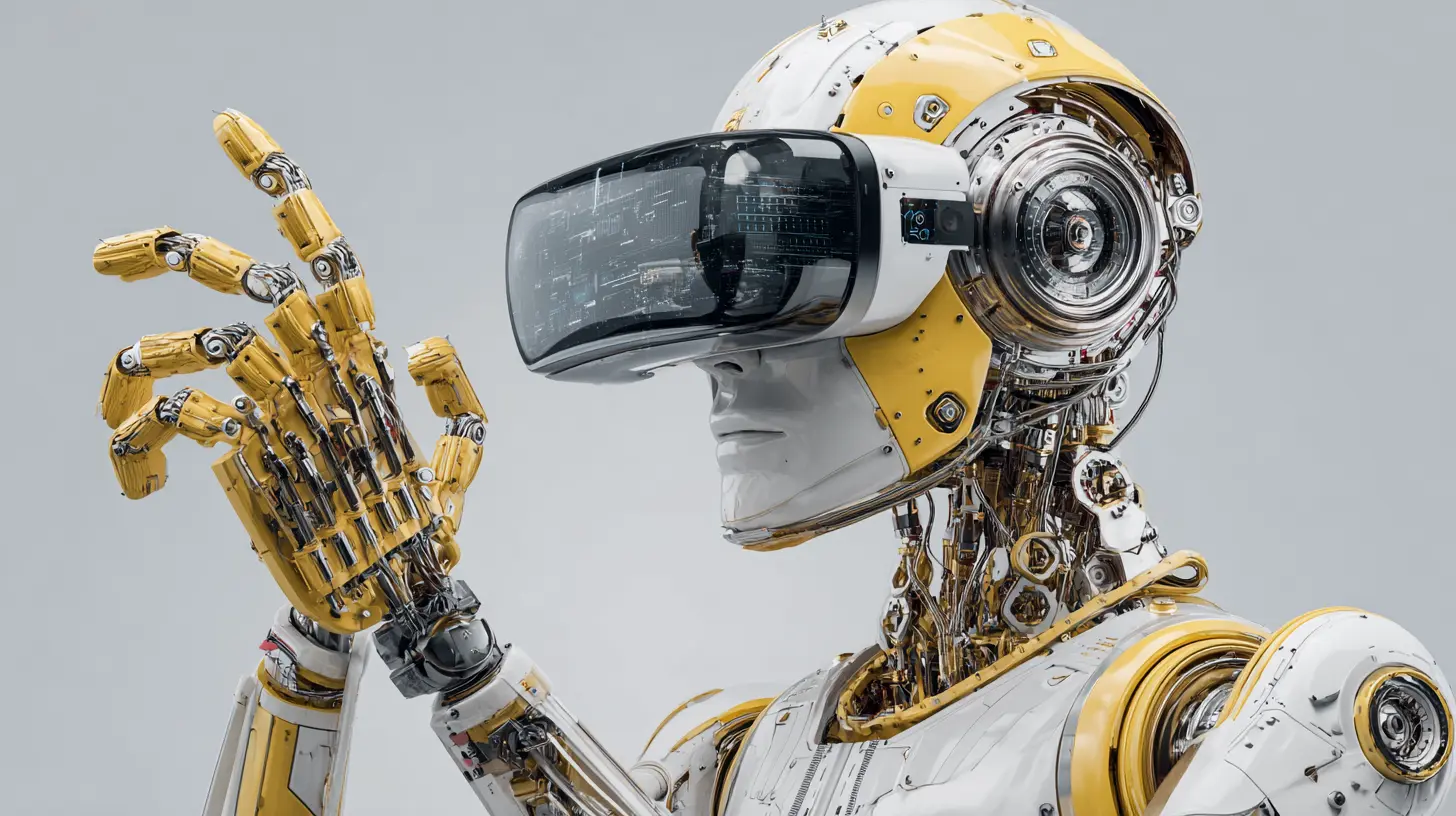
Teleoperation: The Most Mature Use Case
The most straightforward blend of robotics and VR is teleoperation. An operator wears a VR headset that shows a live video feed from cameras mounted on a robot. The operator's hand movements are tracked and mapped to the robot's gripper or end effector. This is not science fiction; it is used today in nuclear decommissioning, underwater exploration, and bomb disposal.Why VR Beats Traditional Joysticks
Traditional teleoperation uses joysticks and monitor screens. The operator sees a 2D projection of a 3D environment. Depth perception comes from experience and camera angle adjustments. With VR, the operator gets stereoscopic vision and natural head tracking. They can lean forward to inspect a gap, look around an obstacle, and judge distances without thinking.The improvement is measurable. In controlled studies, operators using VR for pick-and-place tasks complete them 30 to 50 percent faster than with monitor-based systems, with fewer collisions. The reason is not just better vision. It is the reduction of cognitive load. When you do not have to mentally translate joystick movements into spatial actions, your brain can focus on the task itself.
The Hidden Problem of Proprioception
Here is where many implementations fail. Humans have proprioception - the sense of where our limbs are in space without looking. When you close your eyes, you still know where your hand is. A VR teleoperation system breaks this. Your real hand is moving, but you see a robot hand. The mismatch between what your body feels and what you see causes a phenomenon called sensory conflict.Good systems address this by providing some form of force feedback. Even simple vibrotactile feedback on the operator's hand - a buzz when the robot touches something - dramatically improves performance. The best systems use exoskeletons that resist motion when the robot encounters resistance. But these are expensive and bulky. For most practical applications, a compromise is to overlay a virtual representation of the operator's actual hand position alongside the robot's hand position. This gives the brain a reference point to reconcile the mismatch.
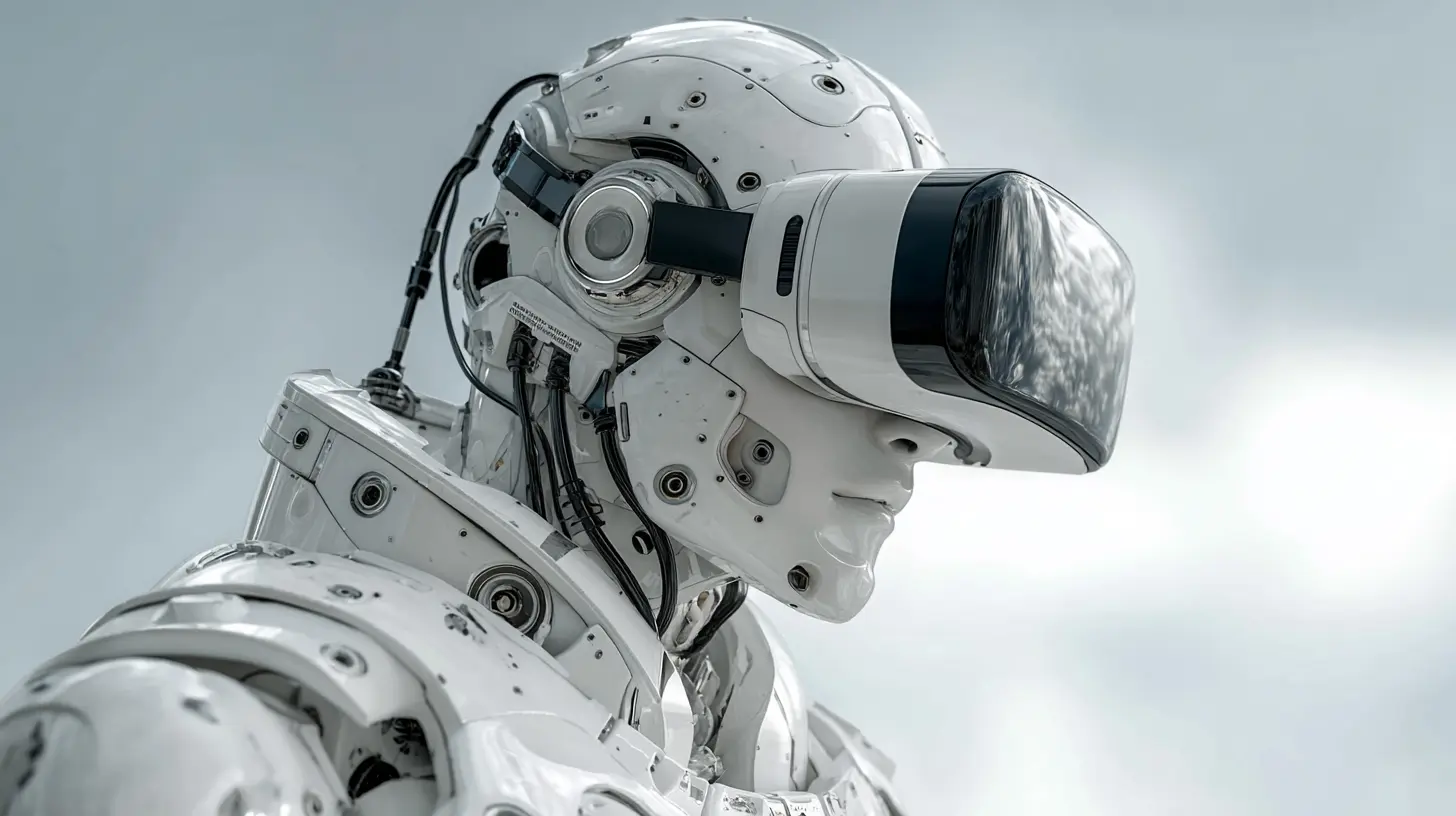
Shared Autonomy: When the Robot Helps
Pure teleoperation is exhausting. Every movement requires conscious effort. The operator's attention must remain constant. After twenty minutes of precise manipulation, fatigue sets in. Shared autonomy solves this by letting the robot handle low-level control while the human makes high-level decisions.The Guarded Teleoperation Model
In this model, the operator directs the robot's end effector to a target location using VR. The robot's controller takes over for the final approach, using its own sensors to align the gripper correctly. This is particularly useful for tasks like peg-in-hole insertion or connector mating, where millimeter precision is required.The key decision is where to draw the boundary between human control and robot autonomy. Too much autonomy, and the operator feels disconnected. Too little, and the fatigue problem remains. A good rule of thumb is to let the robot handle any motion that requires precision below the operator's natural tremor threshold. Most humans have a hand tremor of 0.5 to 2 millimeters. If the task requires better than that, let the robot's servos handle it.
The Shared Control Trade-off
There is a persistent debate about whether shared control improves or degrades performance for expert operators. My experience is that it depends on the operator's skill level. Novices benefit enormously from shared autonomy because they lack the fine motor control needed for precision work. Experts, however, often find the robot's assistance intrusive. They have developed internal models of how the robot behaves and can compensate for its limitations.The best approach is adaptive shared control. Let the system monitor operator performance. If the operator is making smooth, precise movements, reduce autonomy. If they are struggling, increase assistance. This requires sophisticated state estimation and a willingness to let the operator override the system, which many engineers are reluctant to implement.
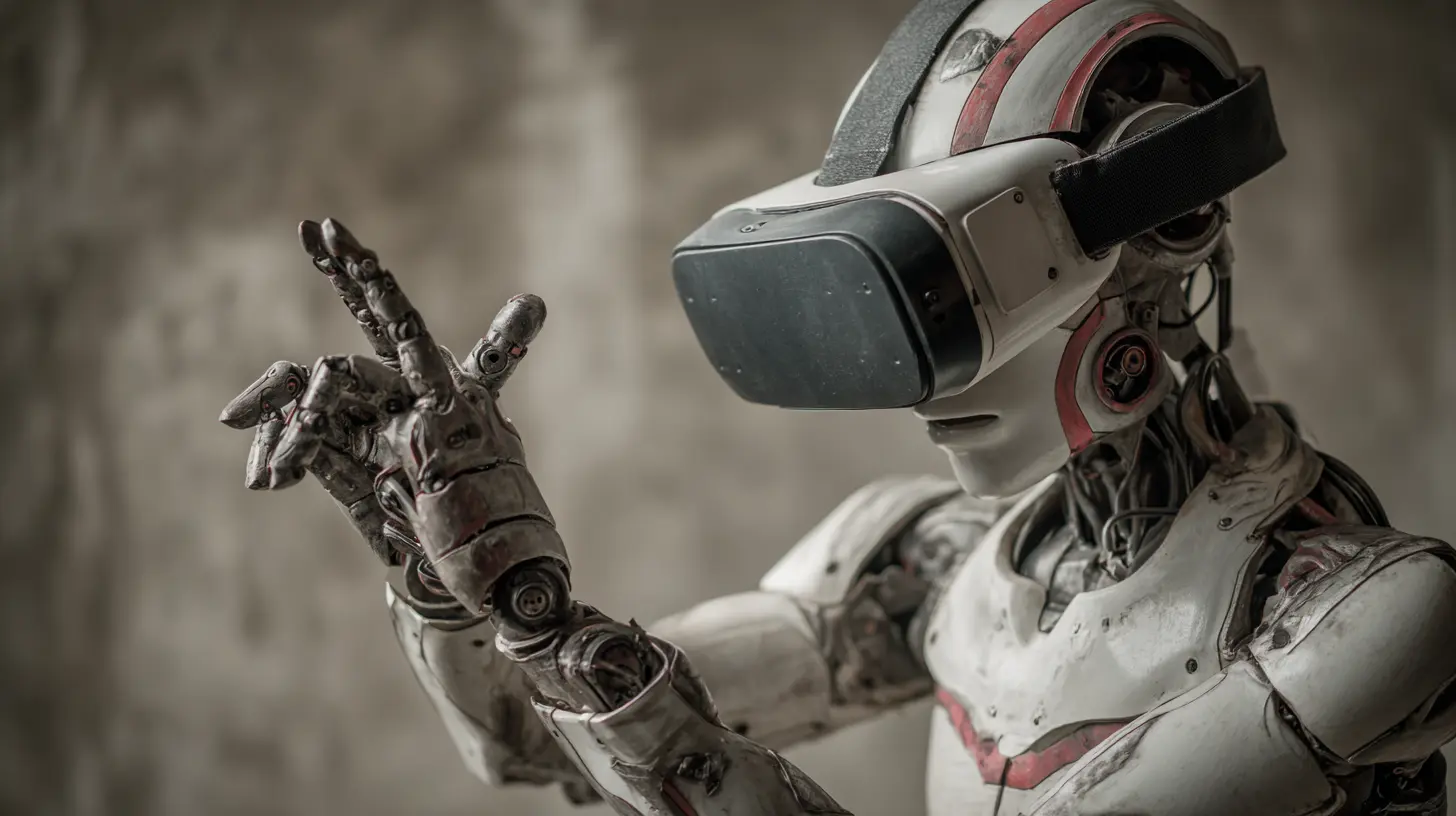
Digital Twins and Simulation Training
Before you ever put a robot in the field, you should train your operators in VR. This is not just about safety. It is about developing muscle memory for a specific robot's kinematics.Why Simulation Matters
Every robot has unique joint limits, acceleration profiles, and singularities. A KUKA arm behaves differently from a Fanuc arm. An operator who trains on the actual robot learns through trial and error, which is slow and potentially damaging to equipment. A VR simulation lets them make mistakes without consequences.The critical detail is that the simulation must be physically accurate, not just visually accurate. Many VR training demos look good but have simplified physics. The robot in the simulation should respond exactly as the real robot would, including joint compliance, inertia, and motor saturation. Otherwise, the operator develops habits that do not transfer to the real system.
Building the Digital Twin
A digital twin is a real-time mirror of the physical robot and its environment. It updates based on sensor data from the real world. The operator can use the twin to practice movements, test sequences, and plan trajectories before executing them on the real robot.The challenge is maintaining synchronization. If the digital twin drifts from the real robot's position, the operator loses trust. This drift happens because of sensor noise, communication delays, and unmodeled dynamics. The solution is periodic recalibration using absolute position sensors, combined with Kalman filtering to estimate the true state. In practice, a well-maintained digital twin can stay within 1 millimeter of the real robot's position for several hours of continuous operation.
Haptic Feedback: The Missing Sense
Vision dominates VR, but for robotics, touch is equally important. You cannot manipulate objects effectively if you cannot feel them. Haptic feedback in VR robotics is still immature compared to visual rendering, but it is advancing rapidly.Types of Haptic Feedback
The simplest form is vibration. A small motor in the controller buzzes when the robot contacts something. This provides a binary signal: contact or no contact. It is better than nothing but conveys no information about texture, hardness, or surface orientation.Force feedback is more advanced. It uses motors or brakes to resist the operator's motion when the robot encounters resistance. This lets the operator feel the weight of an object or the stiffness of a surface. The trade-off is complexity and cost. Force feedback systems are heavy, require significant power, and introduce their own latency.
Tactile feedback is the frontier. Arrays of small actuators press against the operator's fingertips to simulate texture and shape. These systems are still experimental. They work well in controlled lab environments but struggle with durability and calibration in field use.
When Haptic Feedback Hurts
There is a common misconception that more haptic feedback is always better. It is not. Poorly implemented haptics can degrade performance. If the feedback is delayed, it creates a disturbing mismatch between what you see and what you feel. If the feedback is too strong, it masks the natural kinesthetic cues from your own muscles.The principle to follow is transparency. The haptic system should feel like it is not there. It should reproduce the forces you would feel if you were directly touching the object, not add its own dynamics. This is extremely difficult to achieve. Most commercial systems fall short, but even imperfect haptics are better than none for tasks that require feeling, such as inserting a key into a lock or picking up an egg without crushing it.
Common Mistakes and Misconceptions
I have seen teams waste months of development time on problems that could have been avoided with basic understanding of human factors. Here are the most common mistakes.Treating VR as a Drop-In Replacement for Monitors
You cannot take an existing teleoperation system designed for a 2D monitor, add a VR headset, and expect it to work. The VR system requires different camera placements, different field-of-view considerations, and different control mappings. Cameras must be positioned to match the operator's natural interpupillary distance. The field of view must be wide enough to provide peripheral awareness but not so wide that it causes distortion.Ignoring the Operator's Physical Comfort
VR headsets are heavy. Operators wearing them for extended periods develop neck strain. The control interfaces - hand controllers, gloves, or exoskeletons - cause fatigue in different muscle groups than traditional joysticks. A well-designed system accounts for this by allowing the operator to rest their arms on supports, adjusting the headset's center of mass, and implementing frequent breaks.Over-Engineering the Visuals
Many teams spend excessive effort on photorealistic rendering of the virtual environment. For robotics, this is usually wasted. The operator needs clear, low-latency video from the robot's cameras, not beautiful graphics. High-resolution textures and complex lighting models increase latency without improving task performance. A simple, clean visual representation with good contrast and minimal lag is far more useful.Real-World Applications and Considerations
The blend of robotics and VR is not a general-purpose solution. It excels in specific contexts and fails in others.Hazardous Environments
Nuclear waste cleanup, chemical handling, and explosive ordnance disposal are ideal applications. The operator stays safe while the robot works in dangerous conditions. VR provides situational awareness that would be impossible with traditional cameras. The main limitation is communication bandwidth. Underground or underwater environments often have limited data rates, which forces compromises in video quality and latency.Surgical Robotics
VR is used in surgical training and, to a lesser extent, in actual procedures. The da Vinci surgical system uses a stereoscopic viewer that is essentially a VR display. The key difference is that surgical systems prioritize precision over speed. Latency requirements are even stricter because the consequences of error are higher. Surgical VR also requires extremely high-fidelity haptic feedback because surgeons rely on tissue feel to make decisions.Manufacturing and Assembly
In manufacturing, VR-controlled robots are used for tasks that are difficult to automate fully, such as wiring harness assembly or composite layup. The operator handles the complex, non-repetitive parts while the robot provides strength and precision. The trade-off is that the operator's throughput is limited by human fatigue. A skilled operator can maintain high performance for about two hours before needing a break. This makes VR teleoperation suitable for short-run production or customization, not high-volume manufacturing.
Best Practices for Implementation
If you are building a system that blends robotics and VR, follow these guidelines.Start with the Operator
Design the system around the human operator's capabilities, not the robot's. The robot can be programmed to compensate for human limitations. The human cannot adapt to a poorly designed interface. Test with actual operators early and often. Do not rely on engineers who are also the test subjects. Engineers tolerate poor interfaces because they understand the system. Real operators will not.Prioritize Latency Over Fidelity
A 60-frame-per-second video feed with 10-millisecond latency is better than a 120-frame-per-second feed with 40-millisecond latency. The operator's brain adapts to lower frame rates but cannot compensate for delay. Measure your end-to-end latency regularly. It will increase as you add features.Build for Failure
Assume the network will drop packets, the robot will lose power, and the VR headset will overheat. Design graceful degradation. If latency spikes, the system should warn the operator and slow down the robot's motion. If the connection drops entirely, the robot should enter a safe state that does not damage itself or its surroundings.Use Standard Protocols
Avoid proprietary communication protocols. Use ROS 2 for robot control and OpenXR for VR. These are widely supported, well-documented, and compatible with a range of hardware. Proprietary protocols lock you into a single vendor and make it difficult to upgrade components later.The Future: Embodied Intelligence
The ultimate goal of blending robotics and VR is not just remote control. It is creating a system where the robot learns from the operator. Every movement the operator makes through VR is training data. Over time, the robot can learn to perform routine motions autonomously, freeing the operator to handle exceptions.This is called imitation learning or learning from demonstration. It works well for tasks that have consistent structure, such as picking parts from a bin or placing them in a fixture. It works poorly for tasks that require adaptation to novel situations, such as handling deformable objects or responding to unexpected events.
The practical path is to use VR teleoperation for data collection, then train a neural network on the collected trajectories. The resulting model can handle the most common cases. When it encounters something new, it hands control back to the human operator. This hybrid approach combines the flexibility of human intelligence with the consistency of automation.
Conclusion
The blend of robotics and virtual reality is not about making robots look cool in a headset. It is about creating a new kind of human-machine partnership. The robot provides physical capability - strength, precision, endurance. The human provides perception, judgment, and adaptability. VR is the interface that makes this partnership natural.Success requires attention to latency, respect for human factors, and a willingness to let the robot take over when appropriate. The technology is mature enough for production use in specific domains. It is not ready for general-purpose applications. But for the right tasks - hazardous environments, surgical assistance, complex assembly - it is already the best option available.
If you are considering this technology, start small. Build a testbed with a single robot arm, a VR headset, and a simple task. Measure your latency. Test with real operators. Iterate on the interface before scaling to more complex systems. The fundamentals matter more than the features. Get those right, and the rest follows.
all images in this post were generated using AI tools
Category:
Robotics TechnologyAuthor:

Gabriel Sullivan