The Ethics of Autonomous Robots in Society
4 August 2026
We are past the point of asking whether autonomous robots will become common. They already are. Warehouse robots move inventory in facilities that employ almost no human pickers. Autonomous vacuum cleaners navigate living rooms while we are at work. Self-driving delivery vehicles are testing on public streets in dozens of cities. The question is no longer about capability. It is about whether we, as a society, are ready for the moral weight that comes with handing decisions to machines.
Most people think of ethics in robotics as a futuristic problem, something for a distant decade when robots walk among us like humans. That is a comfortable mistake. The ethics of autonomous robots are being written right now, in code, by engineers who never took a philosophy class, and by companies that answer to shareholders before they answer to the public. If we do not engage with these issues seriously, we will wake up in a world where the most important decisions about life, safety, and fairness are made by systems that no one can fully explain.
What Makes a Robot Autonomous, Really?
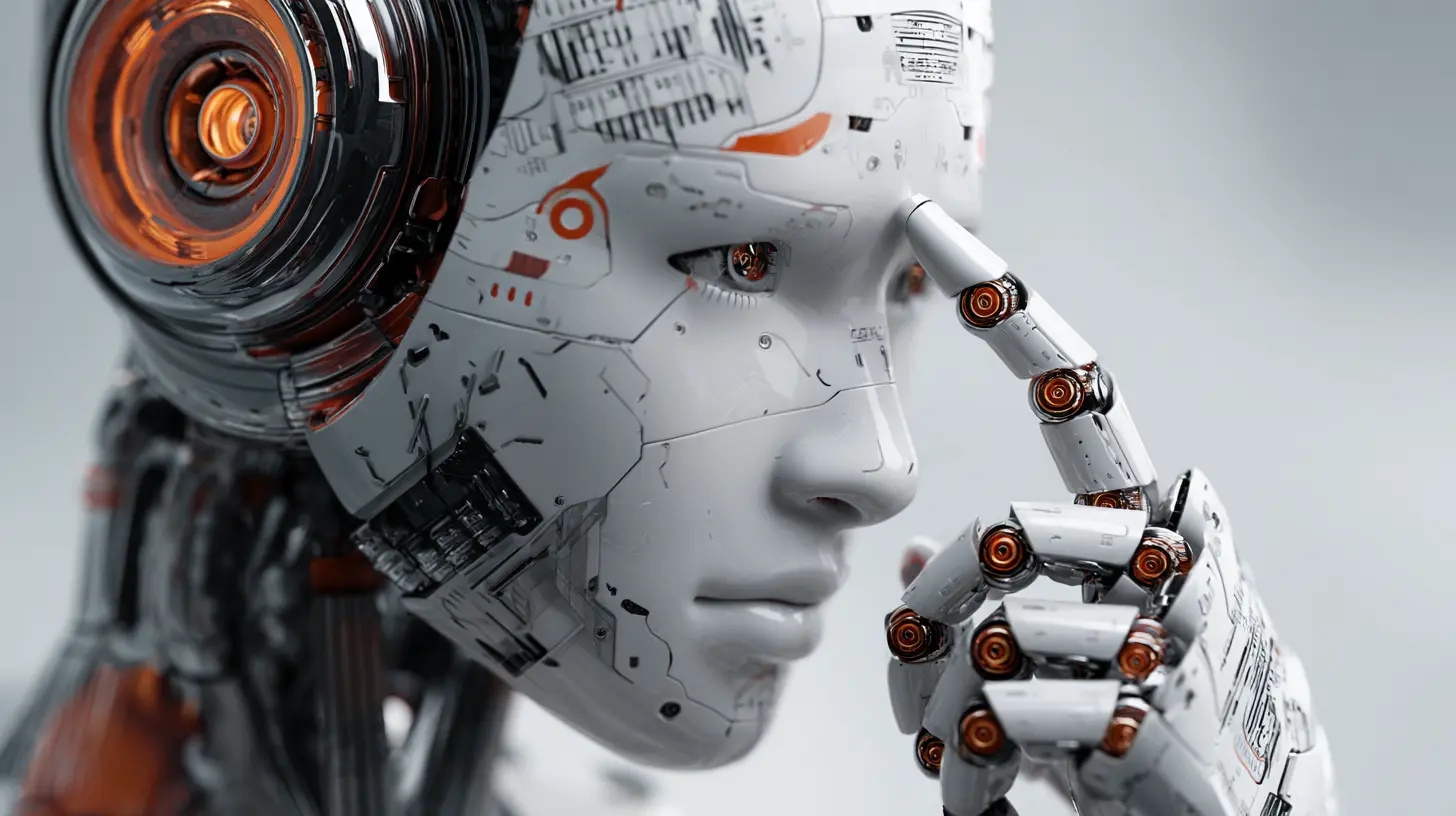
Before we talk about ethics, we need to be clear about what autonomy means. A robot is not autonomous just because it moves without a joystick. A robotic arm on a factory line that repeats the same weld a thousand times a day is automated, not autonomous. It follows a script. It has no ability to respond to unexpected situations.True autonomy means the robot can perceive its environment, make decisions based on that perception, and act without direct human input for at least some period of time. The key word is "decide." An autonomous robot does not just execute. It chooses. And wherever there is choice, there is the potential for ethical failure.
Think of a self-driving car. It sees a child run into the road. It also sees a concrete barrier on the right. It must choose. Brake hard and hope. Swerve left into oncoming traffic. Swerve right into the barrier. The car has milliseconds. The decision it makes will have consequences that ripple through families, courts, and insurance companies. This is not a hypothetical. This is a real situation that engineers are coding for right now, using assumptions about what "good" looks like.
The Trolley Problem Is a Distraction
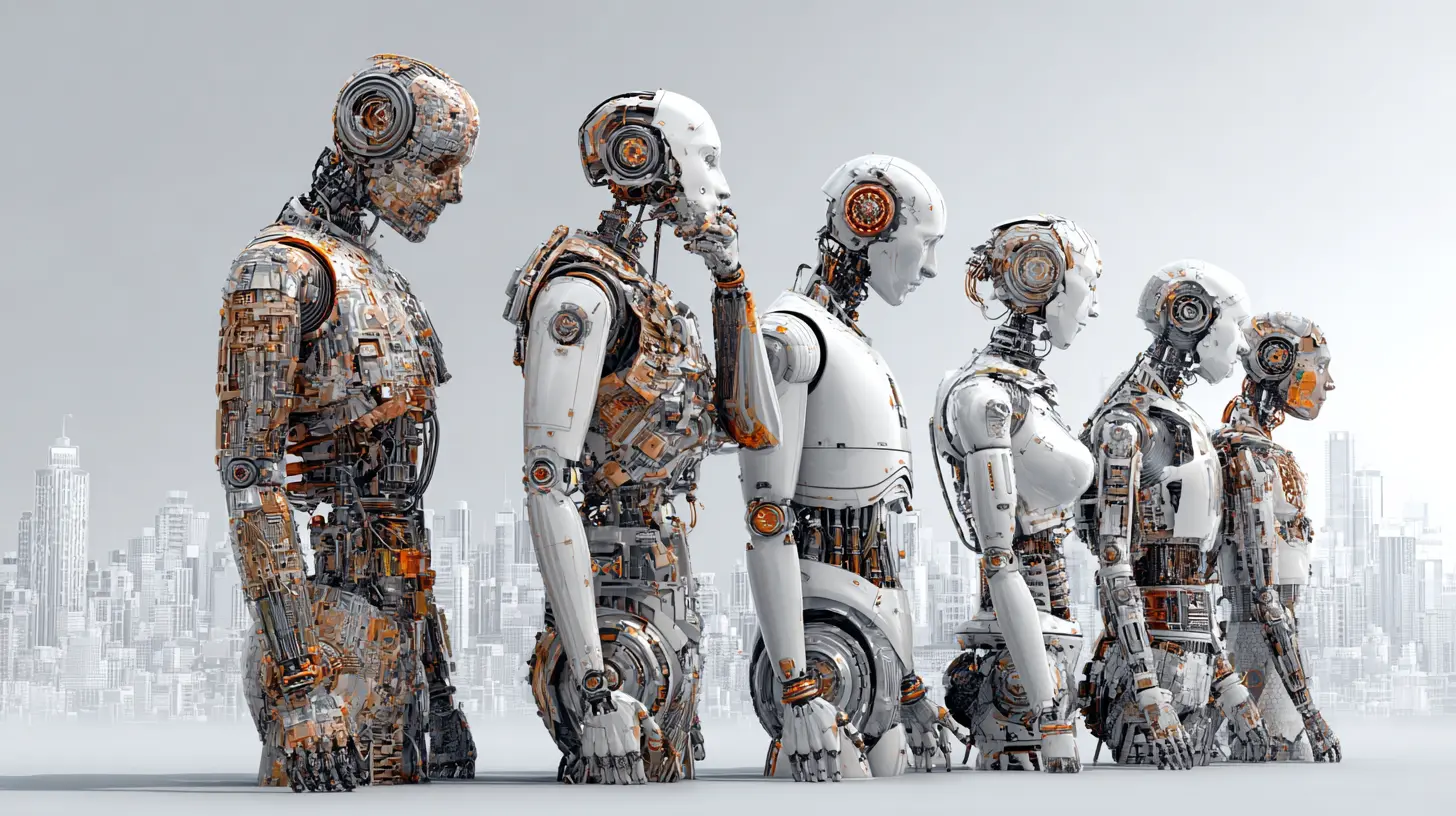
Ask most people about robot ethics and they will bring up the trolley problem. That is the classic thought experiment where a runaway trolley will kill five people unless you pull a lever to divert it onto a track where it kills one. It is a useful philosophical exercise, but it is a terrible foundation for real-world robot ethics.The trolley problem assumes a clean binary choice with perfect information. Real autonomous systems work with partial information, noisy sensors, and unpredictable human behavior. A self-driving car rarely faces a clear choice between two groups of people. More often, it faces a blurry image of something that might be a pedestrian, a shadow, or a shopping cart, and it has to decide whether to brake, swerve, or do nothing based on probabilities.
The deeper problem with the trolley problem is that it focuses on rare, catastrophic moments. The far more common ethical issues are mundane. Should a delivery robot be allowed to cross a street when the light is red but there is no traffic? Should a warehouse robot prioritize speed over the safety of a human worker who wanders into its path? Should a security robot record audio in a public park, and if so, who gets to review that footage?
These are not dramatic dilemmas. They are everyday choices that accumulate into a pattern of behavior. And that pattern is what shapes how we live with robots.
Who Is Responsible When a Robot Does Wrong?
This is the question that keeps lawyers awake at night. When a human driver hits a pedestrian, we know who to blame. The driver was negligent, or the pedestrian was careless, or the road was poorly designed. With an autonomous robot, responsibility becomes diffuse.Imagine a delivery robot that knocks over an elderly person on a sidewalk. The robot was made by one company. Its software was written by another. Its sensors came from a third. The city granted it a permit to operate. The pedestrian might have been wearing dark clothing at dusk. The robot's algorithm might have been trained on data that underrepresented elderly pedestrians. Who is at fault?
The standard answer is that the manufacturer is responsible, just like a car manufacturer is responsible for a defective brake system. But that only works if the robot is truly predictable. Autonomous systems learn. They adapt. They behave differently in the same situation depending on what they have encountered before. A robot that has been operating in a sunny suburb for a year will have different behavior patterns than one that just started operating in a rainy downtown area.
The practical approach is to shift from blame to accountability. Instead of asking who is at fault after an incident, we should ask who is accountable for the system's behavior before it happens. That means the company deploying the robot must be able to explain, in plain language, what the robot is designed to do, what its limits are, and what happens when it fails. If a company cannot provide that explanation, it should not be deploying the robot.
Bias Is Not a Bug, It Is a Feature
One of the most uncomfortable truths about autonomous robots is that they inherit the biases of their creators and their training data. This is not a flaw that can be patched. It is a fundamental property of how these systems are built.Consider a security robot that patrols a shopping mall. It is trained on hours of video footage to identify suspicious behavior. The training data was collected by human security guards, who, like all humans, have their own subconscious biases. The robot will learn to flag the same kinds of people that the guards flagged. If the guards disproportionately stopped young Black men, the robot will do the same, just with more consistency and less visible hesitation.
This is not a hypothetical concern. Studies of facial recognition systems have repeatedly shown that they perform worse on darker skin tones and on women. These systems are already being used in law enforcement and border control. When they are embedded in autonomous robots that can move and act, the stakes become much higher.
The ethical response is not to pretend that bias can be eliminated. It cannot. The response is to demand transparency about the data used to train these systems, and to require ongoing auditing of their behavior in the real world. A robot that cannot be audited is a robot that should not be trusted.
The Problem of Moral Override
Many people assume that the solution to robot ethics is simple: put a human in the loop. Give the robot a remote kill switch, or require a human to approve every major decision. This sounds good in theory, but it fails in practice.The entire point of autonomy is that the robot can act faster than a human can respond. A drone inspecting a bridge does not have time to wait for a human to review each image and decide whether to move closer. A surgical robot cannot pause mid-procedure for a human to confirm each incision. The more capable the robot, the less meaningful human oversight becomes.
There is also the problem of what researchers call "automation complacency." When humans are supposed to monitor an autonomous system, they stop paying attention. They trust the machine. They look away. When the machine makes an error, the human is too slow to catch it. This has been documented in aviation, where autopilot systems have led to crashes because pilots over-relied on them.
The better approach is to design robots with clear "moral override" points. These are specific moments where the robot must stop and ask for human input, not because the robot cannot decide, but because the decision is too important to make without human judgment. For example, a robot might be allowed to navigate around obstacles on its own, but it must stop and ask before crossing a road with heavy traffic. This preserves the benefits of autonomy while keeping humans engaged at the moments that matter most.
Privacy in the Age of Moving Sensors
A robot is a sensor platform with wheels or legs. It carries cameras, microphones, thermal sensors, and sometimes lidar. It moves through spaces that humans occupy. This creates a privacy problem that is fundamentally different from a fixed security camera.A fixed camera watches one spot. A robot watches everything it passes. It can map your living room, listen to your conversation, and track your movements through a store. It can do this continuously, without blinking, without getting bored, without needing a bathroom break.
The ethical question is not just about what the robot records. It is about who owns that data, how long it is stored, and who can access it. In many cases, the people being recorded have no idea that a robot is watching them. They have given no consent. They have no way to opt out.
Some companies have tried to address this by designing robots that blur faces or that stop recording in certain areas. These are good steps, but they are not enough. The real issue is that privacy is a social norm, not just a technical feature. We need to decide, as a society, what kinds of robotic surveillance we are willing to tolerate. That decision should not be made by the companies that sell the robots.
The Economic Ethics of Job Displacement
We cannot talk about the ethics of autonomous robots without talking about work. Robots are already replacing human workers in warehouses, factories, and increasingly in service industries. The economic argument is straightforward: robots are cheaper, faster, and more consistent than humans. They do not call in sick. They do not unionize. They do not ask for raises.But the social argument is more complicated. A person who loses their job to a robot does not care that the robot is more efficient. They care that they can no longer pay their rent. The ethical question is not whether robots should be used, but how the benefits of automation should be shared.
Some economists argue that automation creates new jobs even as it destroys old ones. This has been true in the past. The industrial revolution eliminated millions of agricultural jobs but created millions of factory jobs. The computer revolution eliminated typists but created programmers. The problem is that the transition is never smooth, and the people who lose their jobs are not always the same people who gain the new ones.
There is no single right answer here. Some countries will choose to tax automation and use the revenue to fund retraining programs. Others will let the market sort it out. The ethical responsibility falls on companies that deploy robots. They should not simply lay off workers and move on. They should invest in helping those workers develop skills that are complementary to the robots, such as maintenance, programming, and oversight.
The Military Robot Problem
No discussion of robot ethics is complete without addressing military applications. Autonomous weapons systems, sometimes called "killer robots," are already being developed by major powers. Some are deployed today in limited roles, such as drones that can loiter over a target and decide when to strike.The ethical concerns here are extreme. A robot that can decide to kill a human without direct human authorization crosses a line that many people believe should never be crossed. The arguments in favor are practical: autonomous weapons can react faster, make fewer mistakes due to fatigue, and reduce risk to soldiers. The arguments against are moral: machines should not have the power to take human life, and any system that makes such decisions is vulnerable to error, hacking, and bias.
There is a movement of scientists and ethicists calling for a global ban on fully autonomous weapons. Some countries support this. Others, including major military powers, are reluctant to give up the strategic advantage they believe such systems provide. This is not a problem that can be solved by engineers. It is a problem that requires political will and international cooperation.
Transparency and the Black Box Problem
One of the most practical ethical issues with autonomous robots is that they are often opaque. The algorithms that control them are so complex that even their creators cannot fully explain why they made a particular decision. This is the "black box" problem.If a robot makes a decision that harms someone, the victim has a right to know why. But the answer is often, "We do not know." The robot's decision was the result of millions of weights and biases in a neural network, none of which correspond to a human-understandable rule.
There are two ways to address this. The first is to require that autonomous robots use "explainable AI" techniques, which are designed to produce decisions that can be understood by humans. This is possible for some types of decisions, but it is difficult for others. The second is to require that robots be limited to decisions that are not life-critical. A robot that vacuums your floor does not need to explain its decisions. A robot that drives your car does.
The ethical principle should be: the greater the potential harm, the greater the requirement for transparency. If a robot cannot explain its actions, it should not be allowed to take actions that could seriously harm a human.
What Should Companies Do Right Now?
If you are a company building or deploying autonomous robots, there are concrete steps you can take today to be more ethically responsible. These are not theoretical. They are practical.First, conduct an ethical risk assessment before you deploy. This is like a safety assessment, but it includes questions about bias, privacy, transparency, and accountability. Write down the answers. Review them regularly.
Second, design for failure. Assume that your robot will make a mistake. What happens then? Who is notified? How is the mistake corrected? How do you prevent it from happening again? A robot that cannot fail gracefully is a robot that should not be deployed.
Third, involve stakeholders beyond your engineers. Talk to the people who will live with your robot. Talk to community groups, local government, privacy advocates, and ethicists. They will see problems that your engineers cannot see.
Fourth, be honest about limits. Do not promise that your robot is "safe" or "reliable" if you cannot prove it. Use precise language. Say what the robot can do and what it cannot do. This builds trust, even if it makes your product seem less impressive.
What Should Individuals Do?
You do not have to be a robot engineer to engage with these issues. As a citizen, you can ask questions about the robots in your community. Who approved them? What data do they collect? How can you opt out? If you do not get answers, you can contact your local representatives or write to the company.As a consumer, you can choose to support companies that are transparent about their robotics practices. If a company cannot tell you what its robot does with the data it collects, do not buy that product.
As a voter, you can support policies that require transparency and accountability for autonomous systems. Some cities have already passed laws requiring companies to disclose when robots are operating in public spaces. More of these laws are needed.
The Road Ahead
We are in the early days of autonomous robots. The technology will improve. Robots will become more capable, more affordable, and more common. The ethical challenges will not disappear. They will multiply.The good news is that we are not helpless. We can shape how these systems are built and used. We can demand transparency. We can require accountability. We can design robots that respect human dignity. We can build a society where robots serve us, rather than the other way around.
The key is to stop treating ethics as an afterthought. It is not a checkbox on a product roadmap. It is not a PR exercise. It is the foundation on which all responsible robotics must be built. The robots are coming. The question is whether we are ready to live with them, and whether they are ready to live with us.
all images in this post were generated using AI tools
Category:
Robotics TechnologyAuthor:

Gabriel Sullivan