Top Noise-Canceling Devices for Working From Home
5 August 2026
Working from home sounded like a dream until your neighbor decided to renovate their kitchen, the delivery driver started honking at 9 a.m., and your partner took a conference call in the room next to yours. Suddenly, the quiet sanctuary you imagined has become a symphony of distractions. Noise-canceling technology is not a luxury anymore. It is a professional necessity.
But here is the thing that most articles get wrong: they treat noise-canceling as a single solution. It is not. There are fundamentally different types of noise, and each requires a different tool. You cannot fix a barking dog with the same device you use to mute a low-flying airplane. Understanding that distinction will save you money and frustration.
This guide breaks down the best noise-canceling devices for home offices, explains the science behind why they work, and helps you choose the right one for your specific situation. No fluff, no recycled product lists. Just practical, expert-level guidance.
The Real Problem: Not All Noise Is Created Equal
Before you buy anything, you need to identify your enemy. Noise falls into two broad categories: continuous and intermittent.Continuous noise is steady and predictable. Think of a laptop fan, an air conditioner, traffic on a distant highway, or the hum of a refrigerator. These sounds have a consistent frequency and amplitude. They are the easiest to cancel.
Intermittent noise is sudden and variable. A dog barking, a child crying, a door slamming, a lawnmower starting and stopping. These sounds are sharp, unpredictable, and often carry high-frequency energy. They are much harder to cancel because the technology has to react in milliseconds.
Most people buy a pair of noise-canceling headphones and expect them to solve both problems. Then they get frustrated when the headphones do nothing for the barking dog. That is not a product failure. That is a misunderstanding of physics.
The best approach is to layer solutions. Use one device for the constant background hum and another for the sharp interruptions. Or, in some cases, change your environment entirely.
Active Noise Cancellation vs. Passive Isolation: Know the Difference
Active noise cancellation (ANC) uses microphones to pick up ambient sound, then generates an inverted waveform to cancel it out. This works brilliantly for low-frequency, continuous noise. It is why ANC headphones are so good on airplanes. The engine drone is a perfect target.Passive isolation, on the other hand, is just physical blocking. Think of earplugs, thick headphone padding, or solid walls. Passive isolation works across all frequencies but does not actively "cancel" anything. It simply reduces the volume of everything that reaches your ears.
Here is the critical takeaway: ANC does almost nothing for sudden, high-pitched sounds. A dog bark has a rapid attack and a wide frequency range. The ANC circuit cannot generate a perfect inverse wave fast enough. You will still hear it, just slightly muffled.
Passive isolation, however, can dull that bark significantly. If you have a well-sealed headphone with thick ear cups, the physical barrier reduces the sound pressure before it even reaches your ear canal.
So the ideal home office setup often combines both. A good pair of ANC headphones with excellent passive seals. Or, if you prefer earbuds, you need to choose ones with foam tips that create a tight seal, not just rely on the active circuitry.
Over-Ear Headphones: The Workhorse of Home Offices
Over-ear headphones remain the most popular choice for remote workers, and for good reason. They offer the best balance of sound quality, battery life, and passive isolation.The large ear cups cover your entire ear, creating a sealed chamber. This alone blocks a significant amount of mid and high-frequency noise. Add active cancellation on top, and you get a powerful combination.
The current market leaders in this category are not hard to identify, but the choice depends on your specific needs.
If you want the absolute best ANC for continuous low-frequency noise, the Sony WH-1000XM5 series is still the benchmark. The technology has been refined over multiple generations, and the adaptive noise canceling adjusts to your environment in real time. The downside is the price. These are premium devices.
If you live in the Apple ecosystem, the AirPods Max offer exceptional build quality and a very natural sound profile. However, they are heavy, and the carrying case is famously bad. They also cost more than many laptops.
For a more balanced option, the Bose QuietComfort series has long been praised for comfort. The ear cushions are plush, and the clamping force is gentle. If you wear headphones for eight hours a day, that comfort matters more than a 2 percent difference in noise reduction.
Here is a trade-off that most reviews miss: the microphone quality. If you take a lot of calls, the headphone's microphone matters as much as the sound quality. Sony and Bose have improved their mic arrays significantly, but they still struggle in very noisy environments. If your neighbor is mowing the lawn, the person on the other end of your call will still hear some of it. That is a limitation of Bluetooth bandwidth and mic placement, not a flaw in your device.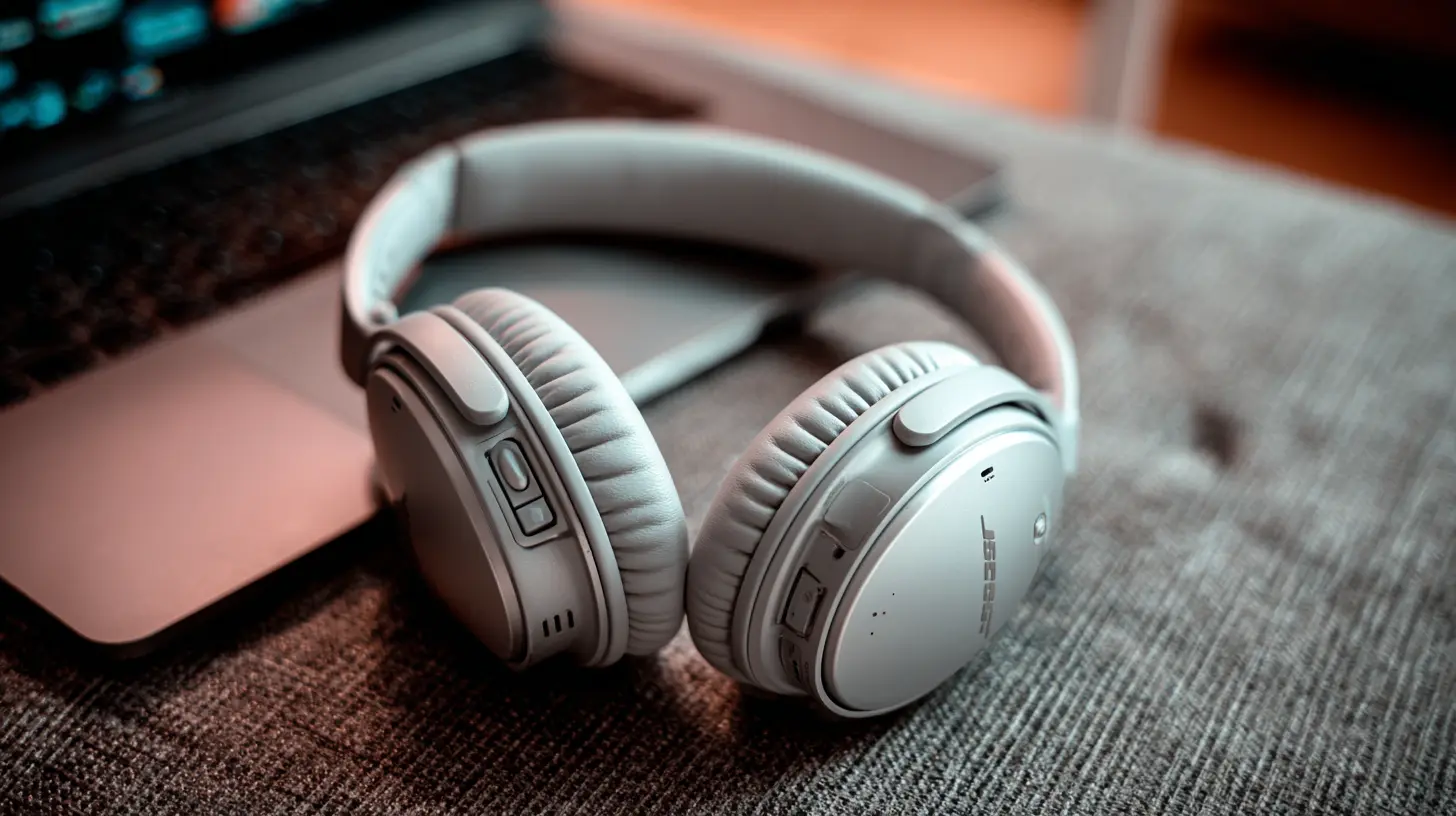
In-Ear Monitors and Earbuds: When Over-Ear Is Too Much
Not everyone wants to wear a heavy headset all day. Some people find over-ear headphones uncomfortable after a few hours, especially if they wear glasses or have sensitive ears. That is where in-ear monitors (IEMs) and true wireless earbuds come in.The best choice here is not the most obvious one. Many people reach for AirPods Pro or Samsung Galaxy Buds, and those are fine. But for pure noise isolation, you should consider IEMs with custom or high-quality foam tips. Products from brands like Etymotic or Shure are not as glamorous, but they provide an incredible passive seal that blocks far more noise than any ANC earbud.
The trick is the seal. A silicone tip that does not fit perfectly will let noise leak in. Foam tips expand to fill your ear canal, creating a much more effective barrier. The difference is night and day.
For ANC earbuds, the AirPods Pro 2 and the Sony WF-1000XM5 are the top contenders. The Sonys have slightly better noise canceling, but the AirPods integrate better with Apple devices. The choice often comes down to ecosystem, not performance.
One common mistake: using earbuds with ANC while on video calls. The microphones on earbuds are small and positioned far from your mouth. They pick up more ambient noise than a dedicated headset. If you are in a noisy environment and take frequent calls, a headset with a boom microphone is a better investment.
The Underrated Hero: A Dedicated USB Microphone with Noise Rejection
This is the device most people overlook. You are trying to cancel noise so you can hear better. But the people on the other end of your calls also need to hear you. A good microphone with noise rejection is just as important as good headphones.A dynamic microphone, like the Shure MV7 or the Audio-Technica ATR2100x, is far better at rejecting ambient noise than a condenser microphone. Dynamic mics are less sensitive and have a tighter pickup pattern. They focus on your voice and ignore the sounds behind you. This is the same reason radio hosts use them.
If you rely on your laptop's built-in mic, you are picking up everything. The laptop mic is designed to capture a wide range of sound, including your keyboard clicks, the refrigerator hum, and the neighbor's dog. A dedicated mic with a cardioid polar pattern solves this instantly.
You do not need a fancy audio interface. Many USB mics have built-in DSP that handles noise gating and compression. This is a one-time purchase that improves your professional presence on every call.
Noise-Canceling Software: The Free(ish) Layer
Hardware is only half the equation. Software-based noise suppression has become remarkably good in the last few years. Tools like Krisp, Nvidia RTX Voice, and the built-in noise suppression in Zoom and Google Meet can remove background noise in real time.These tools work by using machine learning models trained on thousands of hours of audio. They can distinguish between a human voice and a dog bark, then filter out the bark. The technology is not perfect, but it is very effective for most situations.
The advantage of software is that it works with your existing hardware. You do not need to buy new headphones or a new mic. You just install the tool and enable it on your communication apps.
The downside is latency and CPU usage. Some software adds a slight delay to your audio, which can be noticeable on calls. It also consumes processing power, which might slow down older computers. But for most modern laptops, this is a non-issue.
A practical recommendation: use software suppression as a safety net, not as your primary defense. Rely on good hardware for the physical reduction, and let software clean up the leftovers. This layered approach gives you the best results.
Sound Masking: The Counterintuitive Solution
Sometimes the best way to cancel noise is to add more noise. Sound masking does not remove the offending sound. Instead, it introduces a steady, unobtrusive background sound that makes the unwanted noise less intelligible and less distracting.White noise machines, pink noise apps, or even a simple fan can do this. The concept is based on the way our brains process sound. We are more disturbed by sudden changes in noise level than by a constant background hum. If you raise the ambient noise floor, the dog bark becomes less of a shock.
This is especially useful for intermittent noise that ANC cannot handle. A loud fan or a dedicated sound masker can be the most effective solution for a barking dog or a noisy street.
There are also smart sound masking devices that adapt to the frequency of the background noise. They are more expensive but offer better results. However, a $20 fan often works just as well.
The downside is that sound masking can be annoying at first. You have to get used to the constant noise. But after a few days, most people find it soothing. It also helps with focus, as the steady sound creates a consistent auditory environment.
Acoustic Treatment: Fixing the Room, Not Just Your Ears
If you are working from home long-term, consider treating the room itself. Acoustic panels, heavy curtains, and rugs do not cancel noise, but they absorb it. This reduces echo and reverberation, which makes the room feel quieter and improves your microphone audio quality.This is a different problem from external noise. Echo is the sound of your own voice bouncing off hard walls. It makes you sound distant and unprofessional on calls. Acoustic foam panels placed behind your monitor or on the wall opposite your desk can make a significant difference.
Heavy curtains do double duty. They block some external sound and also absorb internal reflections. The thicker and denser the fabric, the better.
A simple trick: place a bookshelf against the wall that faces the noise source. The books act as a natural sound absorber and diffuser. This is a low-cost, effective solution that also adds storage.
Do not expect acoustic treatment to block sound from entering the room. It does not. It only improves the sound quality inside the room. For actual soundproofing, you need mass and air gaps, which is a much bigger project.
Comparison Table: Which Device for Which Situation
| Situation | Best Device | Why || --- | --- | --- |
| Airplane or constant traffic hum | Over-ear ANC headphones | Excellent low-frequency cancellation |
| Barking dog or children playing | Sound masking + passive isolation | ANC cannot handle sudden spikes |
| Keyboard clicks and room echo | Acoustic panels + dynamic mic | Reduces reflections and cleans audio |
| Video calls in a noisy home | Headset with boom mic + software suppression | Mic placement matters most |
| Long work sessions, comfort priority | Comfortable over-ear headphones | Weight and clamping force cause fatigue |
| Budget constraint | Foam-tip earbuds + free software | Passive isolation is cheap and effective |
Common Mistakes and Misconceptions
The biggest misconception is that ANC headphones make you deaf to the world. They do not. They reduce noise, but they do not eliminate it. You will still hear a fire alarm, a person talking loudly right next to you, or a door slamming. That is by design. Complete silence is dangerous and also feels disorienting.Another mistake is buying the most expensive device without considering your specific noise profile. If your main problem is a mechanical keyboard clicking, you do not need a $400 headphone. A $50 pair of foam-tip earbuds will block that sound better than any ANC device.
People also forget about battery life. ANC is power-hungry. A headphone with great cancellation but a 12-hour battery will die in the middle of a workday. Check the battery life with ANC turned on, not off. Some models advertise 30 hours, but that is with ANC off.
Finally, do not ignore fit and comfort. A headphone that sounds amazing but gives you a headache after an hour is useless. You will stop wearing it, and then you have no noise protection at all. Try before you buy if possible. If you buy online, check the return policy.
Best Practices for a Quieter Home Office
Start by identifying your worst noise source. Spend a day just listening. When do you get distracted? What exactly is the sound? Is it constant or intermittent? This diagnosis takes fifteen minutes and will guide every purchase.Then, layer your solutions. Use ANC headphones for the constant hum. Use a fan or masking app for the intermittent spikes. Use a good microphone with software suppression so your callers do not suffer. And treat the room to reduce echo.
Do not try to solve everything with one device. The "perfect" noise-canceling device does not exist because the problem is not one-dimensional.
Also, take breaks from noise cancellation. Wearing ANC headphones all day can cause ear fatigue and a feeling of isolation. Your ears need rest. Take the headphones off during lunch or when you step away from the desk.
Finally, remember that some noise is unavoidable. Do not chase perfect silence. Aim for a level of noise that does not interfere with your work. That is a realistic and achievable goal.
The Future of Noise Cancellation
The technology is evolving fast. Newer devices are using adaptive algorithms that learn your environment and adjust in real time. Some are experimenting with bone conduction and haptic feedback to deliver a more immersive, quieter experience.But the fundamentals remain the same. Physics has not changed. Low-frequency noise is easier to cancel than high-frequency spikes. Passive isolation is still the reliable baseline. And software will continue to get better at cleaning up the audio we cannot physically block.
For now, the best strategy is a balanced, layered approach. Invest in a good pair of ANC headphones if you can afford them. Add a decent microphone. Use free software tools. And do not forget about the humble fan.
Your home office can be a productive, peaceful space. It just takes a little understanding of how sound works and a willingness to use the right tool for the right job.
all images in this post were generated using AI tools
Category:
Home Office TechAuthor:

Gabriel Sullivan