The Emergence of Emotionally Intelligent Robots
14 August 2026
For decades, the public image of robotics has been split between two extremes. On one side, you have the cold, calculating machine that follows logic to the letter, like a factory arm welding car frames. On the other, you have the sci-fi fantasy of a sentient being that feels joy, grief, and loyalty, like Data from Star Trek or the replicants from Blade Runner. The reality we are moving toward sits squarely in the middle, and it is far more practical than either extreme. We are now building robots that do not feel emotions in the human sense, but they can recognize, interpret, and respond to human emotional states with increasing accuracy. This is the emergence of emotionally intelligent robots, and it is changing how we interact with machines in healthcare, education, customer service, and even our own homes.
The shift is not about making robots that are secretly sad or happy. It is about making robots that can read the room. This article will break down what emotional intelligence in robotics actually means, how the technology works, where it is already being used, and what you should consider before deploying these systems in your own work or life.
What Emotional Intelligence Means for a Machine
When we talk about emotional intelligence in humans, we usually mean the ability to perceive emotions, use them to facilitate thought, understand emotional information, and manage emotions. For a robot, this translates into a very specific set of technical capabilities. First, the robot must sense the user's emotional state. This is done through a combination of sensors: cameras for facial expression analysis, microphones for vocal tone and pitch detection, and sometimes even physiological sensors that measure heart rate or skin conductance if the robot is worn or held.Second, the robot must interpret that data. This is where machine learning models come in. A model trained on thousands of hours of human interaction can learn that a furrowed brow and a raised voice often indicate frustration, while a relaxed posture and a steady tone indicate calm. The key here is that the robot is not feeling frustration. It is matching a pattern to a label. This is a crucial distinction that many people miss. The robot is performing a classification task, not experiencing an emotion.
Third, the robot must act on that interpretation. This is the hardest part. The action could be a verbal response, like saying "I understand this is difficult, let me try a different approach." It could be a physical adjustment, like slowing down a robotic arm when it senses the human user is tense. Or it could be a strategic decision, like escalating a customer service call to a human agent when the robot detects high levels of anger.
The term "emotionally intelligent" is therefore a functional label, not a biological one. It describes a system that can navigate social situations with the same outward competence as a well-trained human, but without any inner experience. This is both the power and the limitation of the technology.
The Core Technologies Behind Emotional AI
To build a robot that can respond to your mood, you need more than just a good camera. You need a pipeline of technologies working together. The first layer is perception. Facial action coding systems, or FACS, are often used as a starting point. These systems break down facial movements into individual muscle contractions, like the raising of the inner brow or the pulling of the lip corners. By tracking these action units over time, the software can build a picture of the user's expression.The second layer is audio analysis. This goes beyond speech recognition. It looks at prosody, which is the rhythm, stress, and intonation of speech. A robot can understand the words you say, but it also needs to understand how you say them. A sentence like "That is just great" can be a sincere compliment or a sarcastic complaint depending on the pitch contour and the pause patterns. Modern models are trained on massive datasets of labeled speech to pick up on these subtle cues.
The third layer is context. This is where many early systems failed. A smile can mean happiness, but it can also mean nervousness, politeness, or even pain. Without context, the robot will misread the situation. So, emotionally intelligent robots now incorporate contextual data. Where is the interaction happening? Is it a doctor's office or a gaming console? What was the user doing five seconds ago? What is the task at hand? By fusing all this data, the robot can make a much more accurate guess about the user's emotional state.
The final layer is the response generation. This is often handled by a dialogue system that is specifically designed to be empathetic. Instead of just providing information, the system is programmed to acknowledge the user's state first. For example, if a user is frustrated, the robot might say, "I can see you are having trouble with this step. Let me walk you through it more slowly." This is a scripted response, but it is triggered by the emotional analysis, not by the user's explicit request.
Real-World Applications That Are Already Here
It is tempting to think of emotionally intelligent robots as a future concept, but they are already deployed in several sectors, often in ways that are not obvious to the public.In healthcare, social robots are being used with elderly patients, particularly those with dementia. These robots do not just remind patients to take medication. They monitor the patient's facial expressions and vocal patterns to detect signs of agitation, confusion, or loneliness. When the robot detects distress, it can initiate a calming activity, like playing a favorite song or guiding the patient through a breathing exercise. The benefit here is consistency. A robot does not get tired or frustrated with repetitive questions. It can maintain a calm, patient demeanor for hours, which is something a human nurse cannot always do.
In education, emotionally intelligent tutoring systems are being tested. These systems track a student's engagement level. If the student looks bored, the system changes the difficulty or introduces a more interactive element. If the student looks anxious, the system offers encouragement or breaks the problem down into smaller steps. The advantage is personalized pacing. A human teacher with thirty students cannot tailor their emotional response to each child in real time. A robot can, but it is still a poor substitute for a teacher who knows a child's history and personality.
In customer service, the use is more widespread but less visible. Many phone-based systems already use sentiment analysis to route calls. If a caller's voice indicates high stress, the system might prioritize them for a human agent. The next step is physical robots in retail or hospitality settings. A concierge robot at a hotel can detect if a guest is in a hurry and give shorter, more direct answers, or if the guest is relaxed, it can offer more recommendations. This is a basic form of emotional adaptation that improves user satisfaction without requiring the robot to actually care.
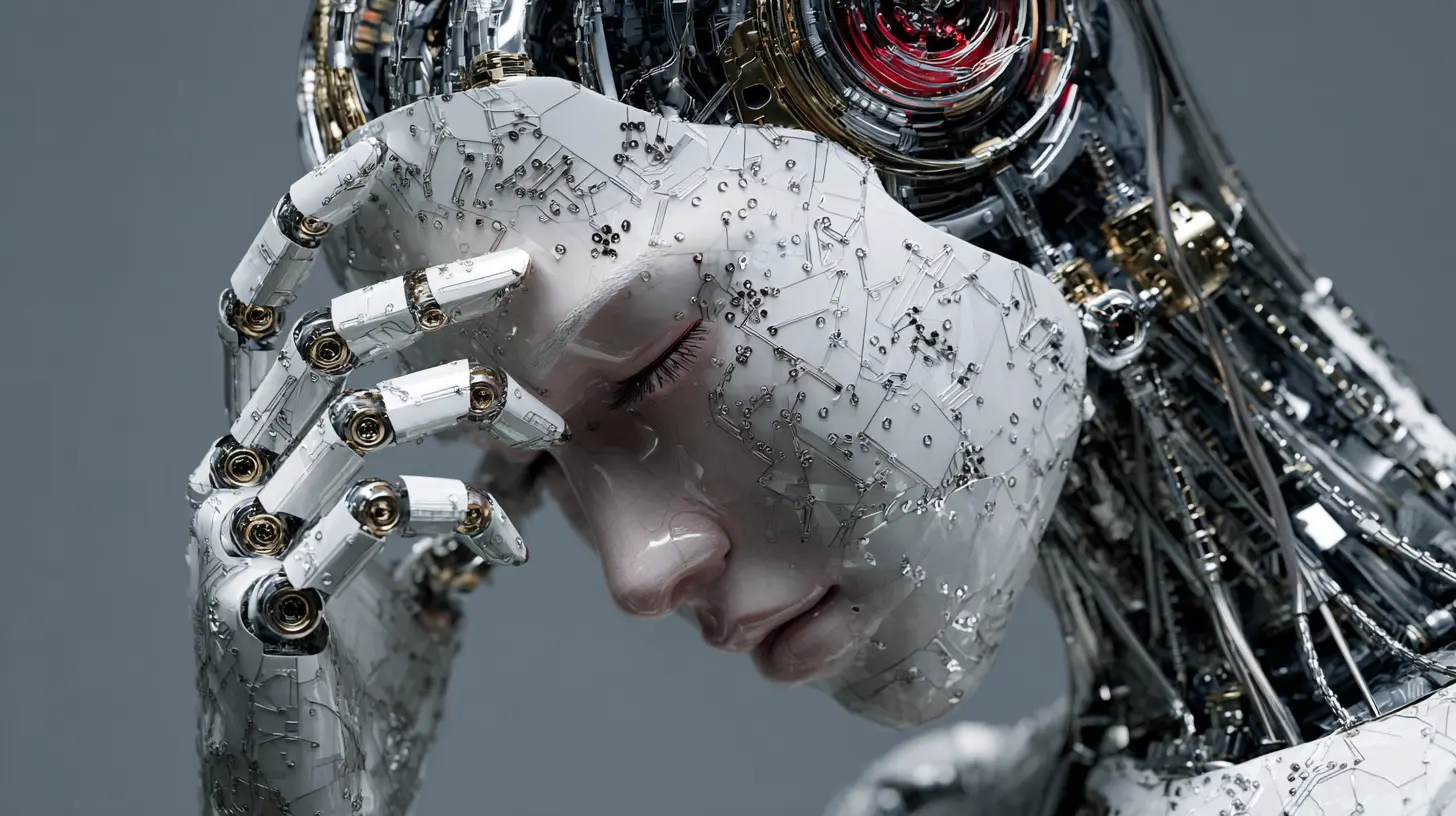
The Critical Difference Between Empathy and Sympathy
One of the biggest misconceptions about emotionally intelligent robots is that they are designed to feel what you feel. That is not the case. They are designed to recognize what you feel and respond appropriately. This is the difference between empathy and sympathy. Empathy is the ability to share someone else's feelings. Sympathy is understanding and caring about someone's suffering without necessarily feeling it yourself.A robot can be programmed to be sympathetic. It can say the right words and make the right facial expressions. But it cannot be empathetic. It has no internal state to share. This distinction matters for practical reasons. If you believe a robot is actually feeling your pain, you might expect it to make decisions based on that feeling. But it will not. It will make decisions based on its programming and its training data. This can lead to a false sense of security, especially in vulnerable populations like the elderly or children.
There is also a risk of over-reliance. If a patient starts to treat a healthcare robot as a confidant, they may stop sharing important symptoms with their human doctor because they feel the robot "understands" them. This is a dangerous failure mode. The robot does not understand. It is performing pattern matching. Designers must be careful to set expectations, making it clear that the robot is a tool, not a friend.
The Trade-Offs of Emotional Deception
This brings us to the ethical question of deception. When a robot says "I understand how you feel," it is technically lying. It does not understand. It has no feelings. But is this a harmless white lie or a harmful manipulation?On one hand, the deception can be therapeutic. In some studies, patients with social anxiety respond better to a robot that offers unconditional positive regard. They do not feel judged, so they open up more. The robot's fake empathy creates a safe space for the patient to express themselves. In this case, the deception serves a clear clinical purpose.
On the other hand, there is a slippery slope. If we become comfortable with machines that fake emotions, we may start to devalue genuine human emotion. We may also become more accepting of manipulation in other areas, like marketing or politics. A robot that can detect your vulnerability and then use it to sell you something is a terrifying prospect. The technology is agnostic. It can be used for therapy or for exploitation.
The best practice is to be transparent. Robots that are designed to respond to emotions should disclose that they are not sentient. This is not just an ethical choice; it is a practical one. If users later discover they were deceived, the trust is broken, and they will reject the technology entirely. Transparency builds long-term trust, even if it makes the initial interaction less magical.
Common Mistakes in Designing Emotional AI
Many teams rush to build emotionally intelligent robots and fail because they make the same basic errors. The first mistake is ignoring cultural differences. A smile in one culture is not always a smile in another. Facial expressions, vocal tones, and gestures have different meanings across the world. A model trained only on Western faces will perform poorly in East Asia or the Middle East. The solution is to train on diverse datasets and to test in the target market before deployment.The second mistake is focusing too much on the face and not enough on the body. Humans communicate a huge amount of emotional information through posture, gesture, and proxemics, which is the use of personal space. A person who is crossing their arms and leaning away is likely defensive, even if their face is neutral. Robots need to use full-body perception, not just facial analysis.
The third mistake is assuming that more data is always better. Emotional data is noisy. A person might be frowning because they are concentrating, not because they are angry. If the robot overreacts to every slight change in expression, it becomes annoying. The system needs to be calibrated to respond only to significant, sustained emotional shifts, not to momentary flickers.
The fourth mistake is neglecting the user's autonomy. If a robot detects that a user is sad, it should not force a cheerful interaction. Sometimes people want to be left alone. An emotionally intelligent robot should know when to back off. This requires the system to have a "do not disturb" mode, which is often overlooked in the rush to make the robot more engaging.
How to Evaluate an Emotionally Intelligent Robot
If you are considering deploying such a system, whether in a clinic, a school, or a business, you need a clear evaluation framework. Do not just look at the marketing materials. Ask specific questions.First, ask about the training data. What populations was the model trained on? Does it include people of different ages, races, and genders? Does it include people with facial differences or disabilities? If the training data is narrow, the robot will have blind spots.
Second, ask about the failure rate. No system is perfect. What happens when the robot misreads an emotion? Does it apologize? Does it ignore the misread and move on? Does it escalate to a human? The handling of errors is more important than the accuracy rate itself.
Third, ask about privacy. Emotional data is highly sensitive. It reveals not just what you say, but how you feel. How is this data stored? Who has access to it? Is it used for training other models? You need a clear data governance policy before you let a robot watch your patients or customers.
Fourth, ask about the exit strategy. What happens when the robot is turned off? Can the user still get the same level of service? If the robot is the only point of contact, you are creating a dependency that may not be sustainable.
The Future of Human-Robot Collaboration
The next phase of this technology is not about making robots more human. It is about making human-robot teams more effective. Imagine a warehouse where a robot and a human work side by side. The robot handles the heavy lifting, but it also monitors the human's fatigue level. When the human starts to slow down or show signs of stress, the robot adjusts the pace or takes on more of the load. This is not about the robot caring. It is about the robot optimizing the workflow based on human state.In the same way, a surgical robot could monitor the lead surgeon's stress levels during a long procedure. If the robot detects that the surgeon is becoming fatigued, it could flag the situation to the rest of the team or suggest a break. This is a safety feature, not a social nicety.
The key takeaway is that emotionally intelligent robots are tools for better outcomes. They are not replacements for human connection. The best systems are the ones that know their limits. They enhance human interaction by providing data and support, but they defer to humans for genuine judgment and care.
Misconceptions You Should Drop Right Now
There is a persistent fear that emotionally intelligent robots will make us cold and disconnected. This is not supported by the evidence. In practice, these robots often encourage more human interaction. A robot that detects loneliness in an elderly person can prompt that person to call a family member. A robot that detects frustration in a student can suggest they ask a classmate for help. The robot acts as a social catalyst, not a social replacement.Another misconception is that this technology is only for large corporations with big budgets. The core components, like facial recognition and sentiment analysis, are available as open-source libraries. A small team can build a basic emotionally aware chatbot in a few weeks. The barrier to entry is dropping fast. The challenge is not the technology; it is the design and the ethics.
Finally, do not assume that a robot with emotional intelligence is always better than a simple machine. Sometimes a straightforward, no-nonsense interface is exactly what the user wants. If you are filling out a tax form, you do not want the software to ask how you are feeling. You want it to process your numbers. Emotional intelligence should be a feature that is turned on only when it adds value, not a default for every interaction.
Practical Steps for Getting Started
If you want to start building or using emotionally intelligent robots, start small. Pick a single use case with a clear outcome. For example, you might want to reduce the number of abandoned calls in your customer service center. Use sentiment analysis to detect when a caller is about to hang up in frustration, and then offer a callback option. Measure the results. If the intervention works, expand it.Do not try to build a system that handles every emotion in every context. That is a recipe for failure. Instead, focus on one or two emotions that are most relevant to your domain. In a hospital, that might be pain and anxiety. In a classroom, that might be confusion and boredom. In a retail store, that might be impatience and delight. Narrow the scope, and you will get better results.
Also, involve the end users in the design process. Let the nurses, teachers, or customers test the robot early. Watch how they interact with it. You will learn more in an hour of observation than in a week of theoretical design. The users will tell you what is helpful and what is creepy. Listen to them.
The Bottom Line
Emotionally intelligent robots are not science fiction. They are here, and they are improving. But they are not magic. They are pattern-matching systems that can make educated guesses about how you feel and respond in ways that are socially appropriate. They have real value in healthcare, education, and customer service, but they also have real limits. They cannot feel, they cannot truly care, and they should never be trusted with decisions that require genuine moral judgment.The emergence of this technology is not a threat to humanity. It is a mirror. It forces us to ask what we value about human interaction. If a robot can fake empathy well enough to calm a patient, what does that say about the power of real empathy? The answer is that it makes real empathy more valuable, not less. The robot can handle the routine emotional labor, freeing up humans to focus on the deep, meaningful connections that machines can never replicate.
Before you deploy an emotionally intelligent robot, ask yourself what you are trying to achieve. If the goal is efficiency, a simpler tool might be better. If the goal is to improve the human experience, then a robot that understands your mood can be a powerful ally. Just remember that it is an ally with a script, not a friend with a heart.
all images in this post were generated using AI tools
Category:
Robotics TechnologyAuthor:

Gabriel Sullivan