The Intersection of AI and AR: Creating Smarter Augmented Experiences
23 March 2026
Let’s be honest—augmented reality (AR) is already pretty cool. You hold up your phone and suddenly you’re seeing digital dragons in your backyard or trying on sunglasses without physically putting them on. But pair AR with artificial intelligence (AI), and you're not just adding sprinkles to your ice cream—you’re turning it into a full-on sundae with whipped cream, nuts, and a cherry on top.
In this article, we’re diving head-first into how these two cutting-edge technologies are coming together like best friends at a summer camp to create smarter, more interactive, and freakishly intuitive experiences. So, grab your favorite snack and let’s geek out together.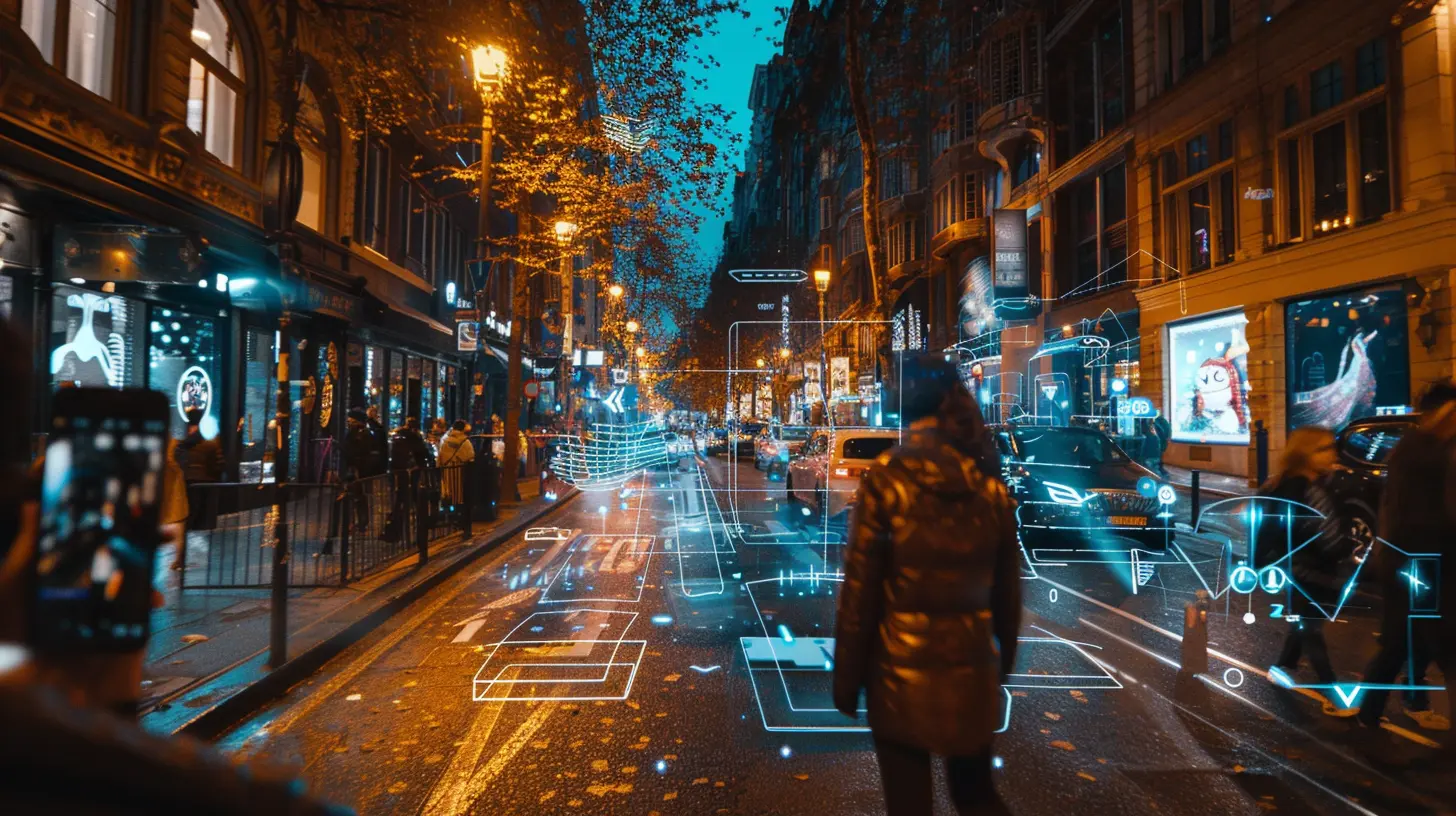
Understanding the Basics: What’s AR and AI?
Let’s not assume everyone’s a tech whiz, so here’s a quick refresher:Augmented Reality (AR)
AR overlays digital content—like images, videos, and 3D models—onto the real world. Think Snapchat filters, Pokémon Go, or even IKEA’s app that lets you see how that couch really fits in your living room.Artificial Intelligence (AI)
AI is the umbrella under which machines simulate human intelligence. They learn, reason, and make decisions. We’re talking about voice assistants, recommendation algorithms (Netflix knows you too well), and self-driving cars.So What Happens When You Combine AI and AR?
Magic. Really.While AR shows you digital content in real space, AI makes those interactions smart. Instead of a static 3D model floating in your room, you get something that adapts, learns, listens, and responds.
The Smarter Side of Augmented Reality
Adding AI into the mix supercharges AR. Let's walk through some of the amazing ways this combination is making waves in tech—like peanut butter meeting jelly, but way more high-tech.1. Real-Time Object Recognition
Ever pointed your camera at something and had no idea what it was? AI’s got your back.Thanks to deep learning and computer vision, AI can now identify objects, people, animals—you name it—in real-time. AR then uses this intel to display relevant digital overlays.
Example: You aim your phone at a plant, and voilà! The AR experience tells you what species it is, how often it needs water, and if it's safe for your cat.
2. Personalized Interactions
AI thrives on data. The more it gets, the better it understands you. When combined with AR, it creates experiences tailored just for you.Imagine this: You walk into a sneaker store wearing smart AR glasses. Instead of showing you every single shoe, the display highlights ones in your size, preferred style, and even suggests sneakers based on your past purchases. That’s next-level convenience.
3. Enhanced Facial Recognition & Emotion Detection
Facial filters are fun, but AI can take it further. We're talking about recognizing who you are and how you're feeling.Applications in mental health, customer service, and even gaming are using AI-driven AR to respond to emotional cues. Feeling sad? Your AR therapist might suggest meditation techniques. Looking excited? The game might level up the challenge.
Real-World Applications: Where AI Meets AR
Let’s get out of theory and look at actual places this tech combo is being used to do some serious heavy lifting.1. Healthcare: Smarter Diagnostics and Surgery
Doctors are using AR to visualize organs, veins, and even tumors in 3D while performing surgeries. AI supports this by offering predictive diagnosis and treatment options with a level of precision that’s jaw-droppingly accurate.Bonus: Medical students can practice surgeries on AI-powered AR simulations. Way safer than the real thing, right?
2. Retail: Try Before You Buy, But Smarter
We mentioned AR fitting rooms, but AI personalizes the experience. Instead of just virtually trying on clothes or makeup, AI considers your skin tone, facial structure, and historical preferences to recommend what's most flattering.Shopping just got a whole lot easier—and smarter.
3. Automotive: Safer Navigation and Maintenance
Think heads-up displays (HUDs) that don’t just show you directions, but adapt based on your driving behavior, traffic conditions, and even weather forecasts. AI-enhanced AR systems can also point out engine issues or offer smart repair tutorials tailored to your car make and model.Feels like having a mechanic and a GPS living in your dashboard.
4. Education: Immersive Learning That Adapts to You
Reading textbooks can be dry. But imagine pointing your device at a page and watching the Battle of Waterloo unfold in 3D. Now combine that with AI that tracks how quickly you're learning and where you're struggling, and adjusts the pace accordingly.It’s like having a teacher who literally reads your mind.
The Challenges (Because Nothing’s Ever Perfect)
Okay, so this tech marriage is dreamy—but it’s not without its hiccups.1. Data Privacy Concerns
AI needs data to learn and adapt. AR devices see what you see. That’s a lot of sensitive information floating around. Striking a balance between personalization and privacy is a tricky tightrope.2. Hardware Limitations
For all this magic to happen in real-time, devices need to be powerful AF. That means investing in next-gen processors, sensors, and batteries. Not all current smartphones and glasses are up to the challenge.3. Cost and Accessibility
Bleeding-edge tech doesn’t come cheap. Making sure smarter AR experiences aren't just for the privileged few is a hurdle the industry needs to tackle head-on.The Future: Where Are We Heading?
Spoiler alert: It’s only going to get crazier—in the best way.AI Meets the Metaverse
As the metaverse becomes more than just a buzzword, AI and AR are expected to play starring roles. AI will drive intelligent NPCs (non-player characters), while AR will bridge the physical and virtual worlds in seamless, almost sci-fi-like ways.Contextual Intelligence
Imagine your AR glasses not only showing you walking directions but suggesting a coffee shop based on your recent Google searches and current mood (yes, AI could detect that too). That’s context-aware AI-powered AR, and it’s just around the corner.Universal AR Assistants
Think Siri or Alexa, but visual. You look at your printer, and your AR glasses show you how to replace the ink cartridge step by step. That’s the dream—and AI is the brain that makes this vision work.Why You Should Care
Listen, you don’t have to be a tech geek to get excited about this. AI and AR are fusing to revolutionize how we interact with the world—just like smartphones did a decade ago. Whether you're in marketing, education, healthcare, or just a curious soul, these technologies are going to touch your life in unexpected and exciting ways.Here’s the kicker: this isn’t the distant future. It’s already happening. And it’s only getting smarter from here.
Final Thoughts
The intersection of AI and AR is a game-changer in every sense. When you combine the visual overlay of AR with the brainpower of AI, you’re creating experiences that feel alive—responsive, intuitive, downright amazing.It’s like teaching your technology to not only show you the world but understand it too.
So, next time your phone recommends the perfect pair of jeans, helps you diagnose your pet’s rash through the camera, or guides you through assembling IKEA furniture without tossing the manual across the room—thank the powerful duo of AI and AR.
We're not just building tech anymore—we're building experiences that think.
all images in this post were generated using AI tools
Category:
Augmented RealityAuthor:

Gabriel Sullivan
Discussion
rate this article
2 comments
Hattie Miller
This article beautifully highlights the magic that happens when AI meets AR! It's exciting to think about the endless possibilities—imagine enhancing our reality with smart, personalized experiences. Can’t wait to see how these technologies evolve and reshape our daily interactions. Here’s to a future where tech truly understands us!
April 13, 2026 at 12:22 PM
Gabriel Sullivan
Thanks for your thoughts! The blend of AI and AR really is a game changer, and I share your excitement for what's ahead. Looking forward to seeing how these innovations transform our lives too!
Thaddeus Lane
Blurring lines between reality and imagination, AI-driven AR is the future of interaction.
March 25, 2026 at 3:51 AM
Gabriel Sullivan
Absolutely! AI-driven AR is revolutionizing how we engage with our environment, bridging the gap between the real and the imagined for richer, smarter experiences.